RAISING HIGH JUMP PUPPIES
A dear breeder friend of mine said:
“Our puppy price is for ten weeks of training. The puppies themselves are free. More training required later.” I think that say it just about right!"
I’d like to give you a view into how our puppies are raised. We are always doing our best to increase our knowledge of breeding, genetics, health and wellness of our breeding dogs. We believe in the use of science based and loving methods of puppy raising. We are strong believers in the Puppy Culture program while also incorporating what we continually learn from sharing with the other experienced breeders that we interact with regularly.
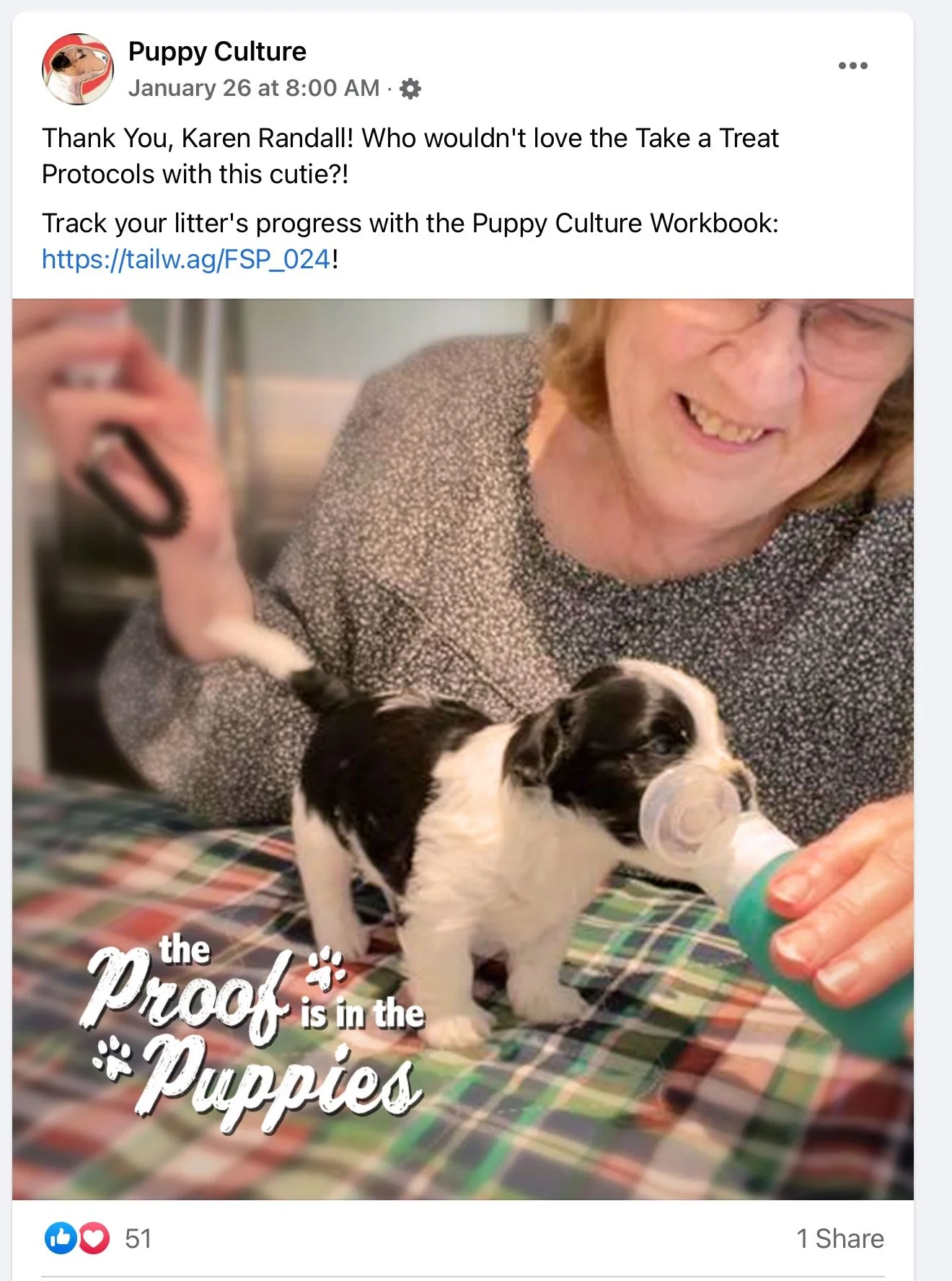
“Puppy Culture” has been followed by good breeders for over a decade. Although there are excellent breeders who do all the right things without calling it Puppy Culture, there are some breeders who pay lip service to the method. We try to be as faithful to this method as possible. As Puppy Culture says: “the proof is in the puppies.”
So we would like to walk you through, week by week, what goes into raising a High Jump Havanese puppy, and why we believe our puppies are special. We work hard to bring out the very best in every puppy we produce!
We strive for properly constructed and pretty dogs. But, that doesn’t mean only show dogs. We want every dog we produce to, first and foremost, be a loved and loving, well balanced member of the family. We believe that is due in large part, to the start we give them here before they go home with you!
We start the way all good breeders do, of course choosing parents with good genetics, good conformation, good temperaments, and health tested above and beyond breed requirements as well. We prefer to use dogs who have proven themselves in the conformation and/or performance rings, though we will make exceptions for exceptional individuals.
The Whelping Room
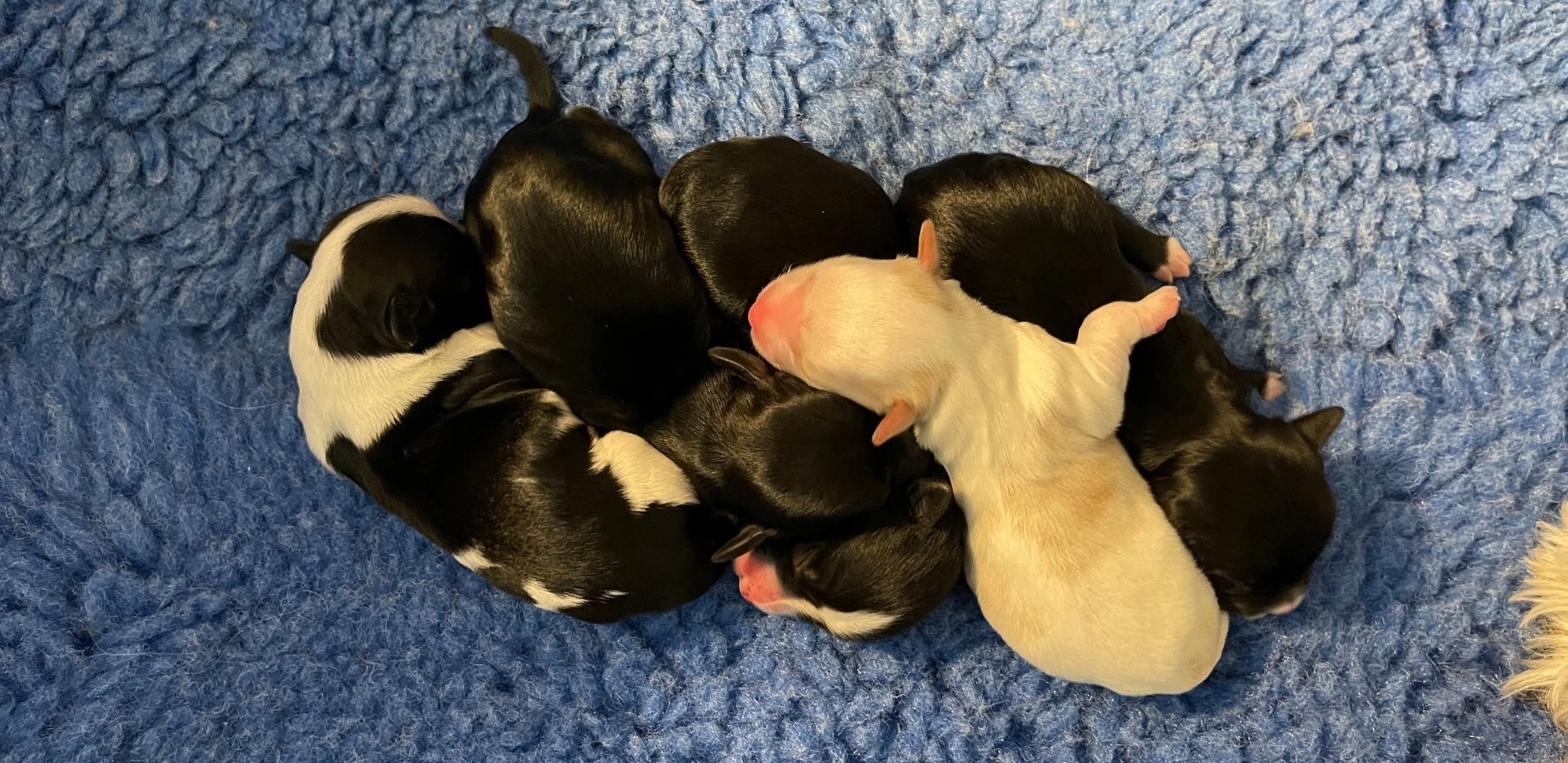
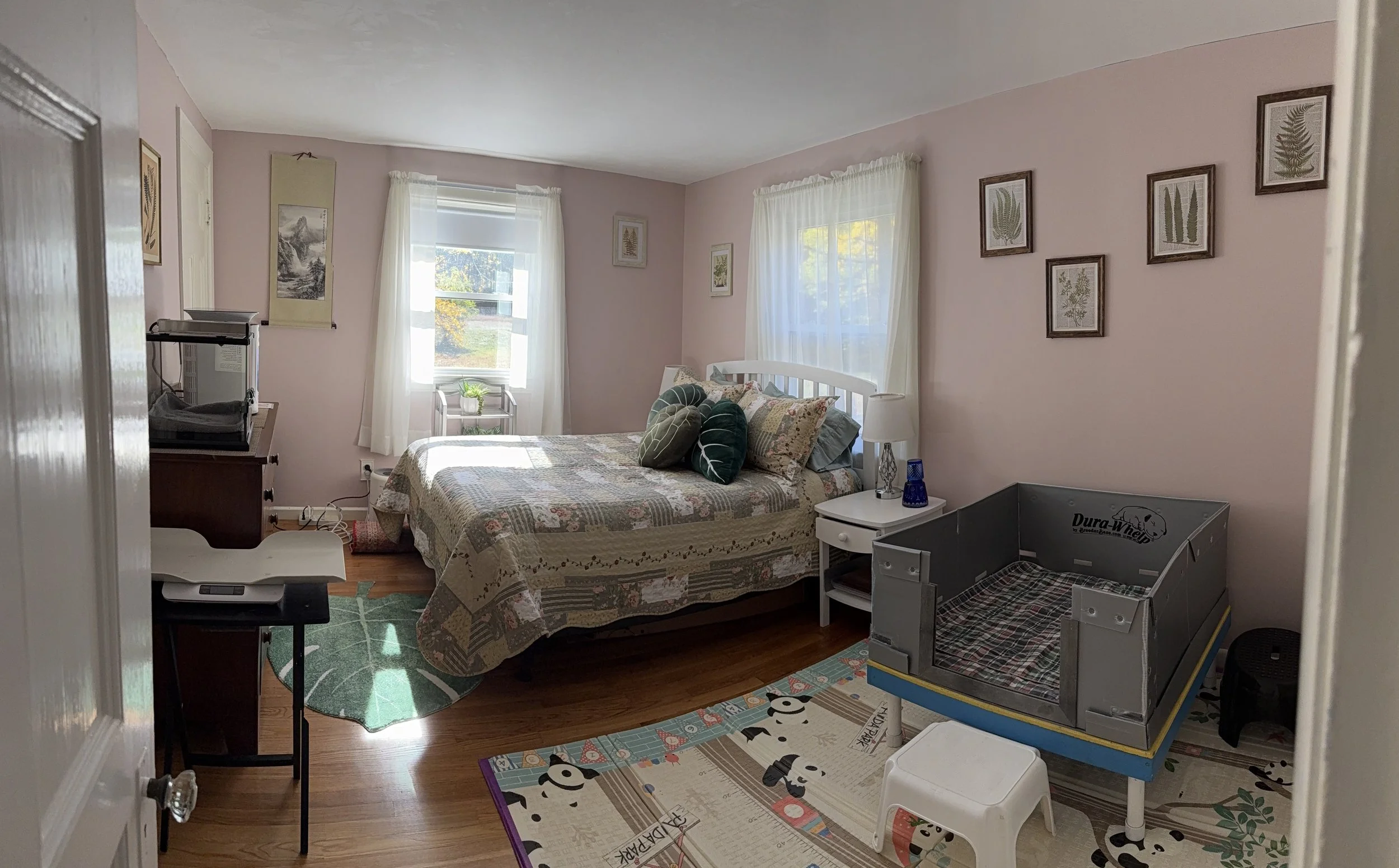
Our puppies are whelped in our spare bedroom and spend their first month there. All the supplies we will need for the birth and for the newborns are neatly stored close at hand. To save our backs, the whelping box is raised up just until after the pups are born. Then the table is slipped out and the box is placed on the floor to make it easier for mom to get in and out.
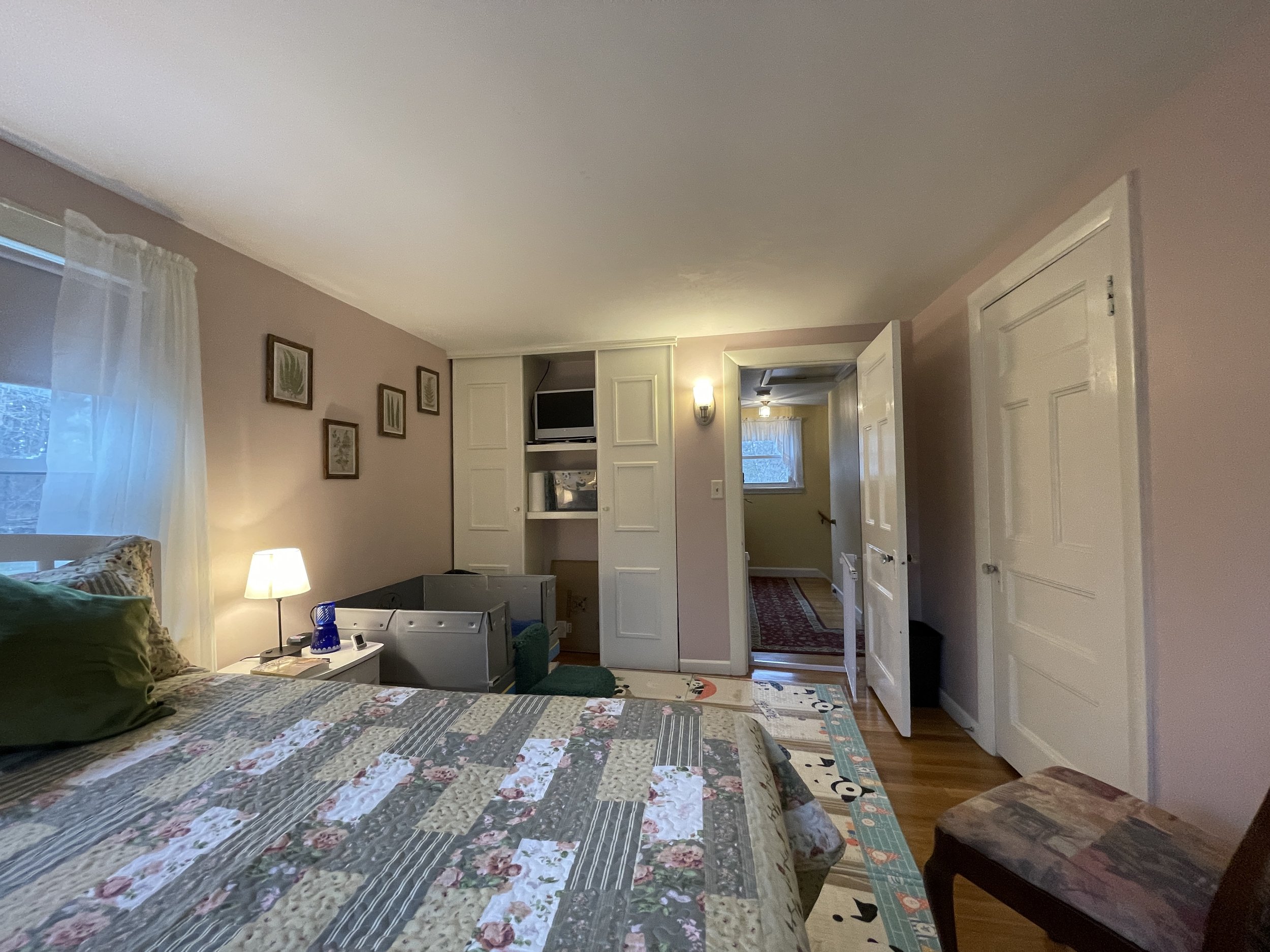
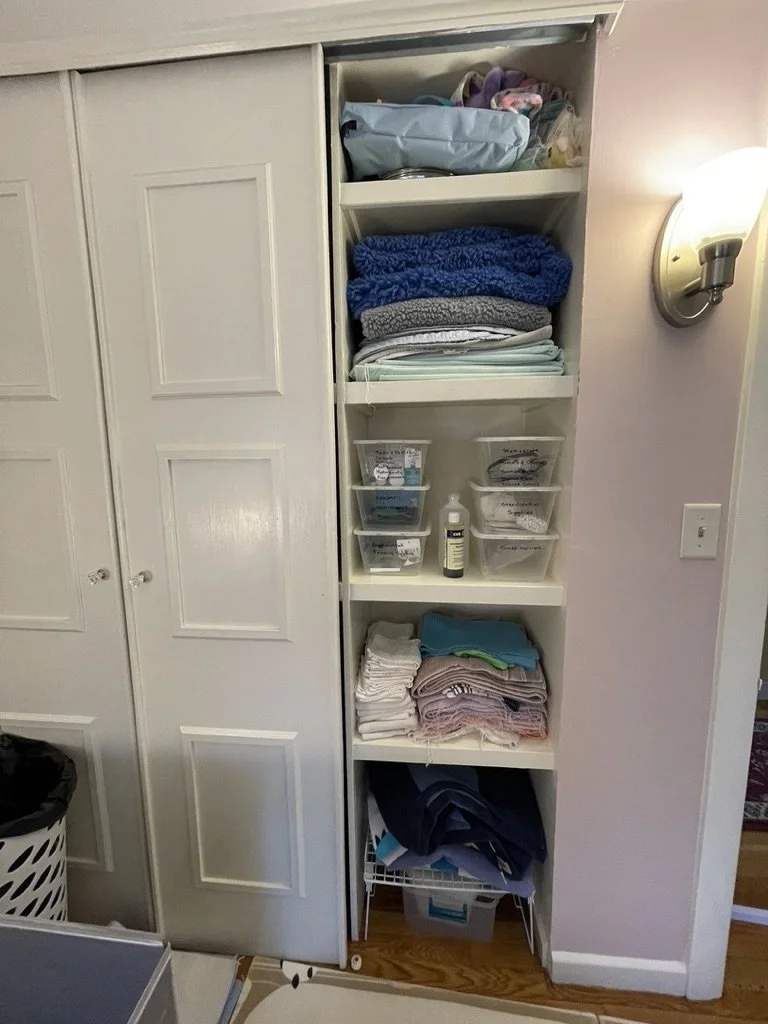
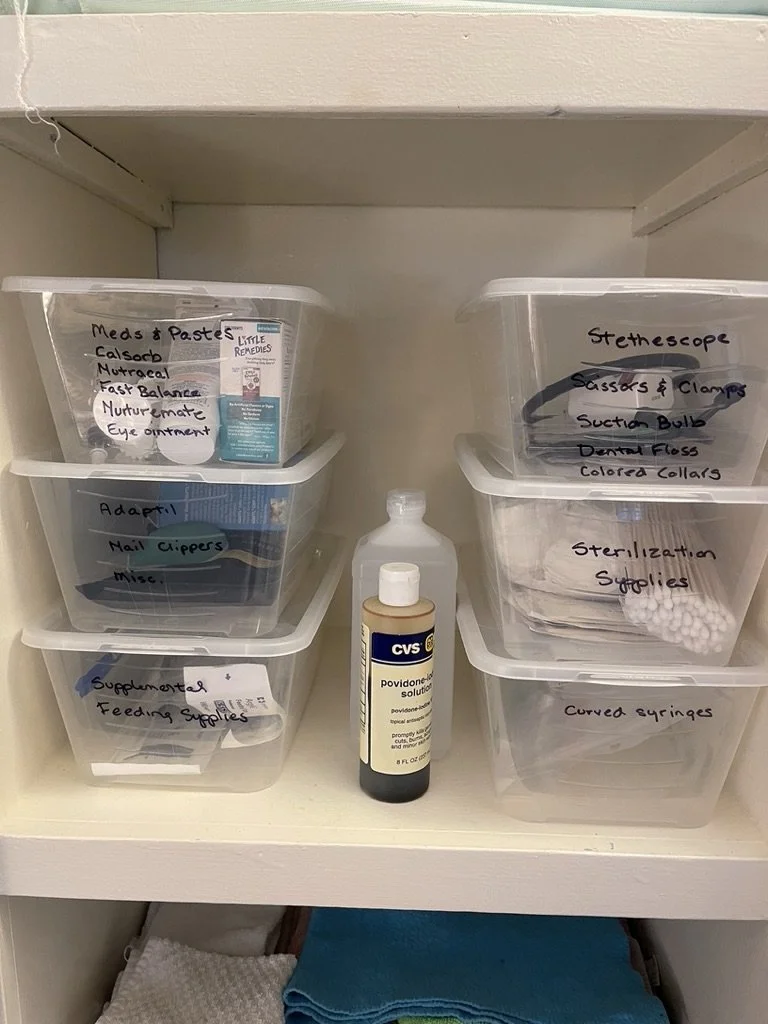
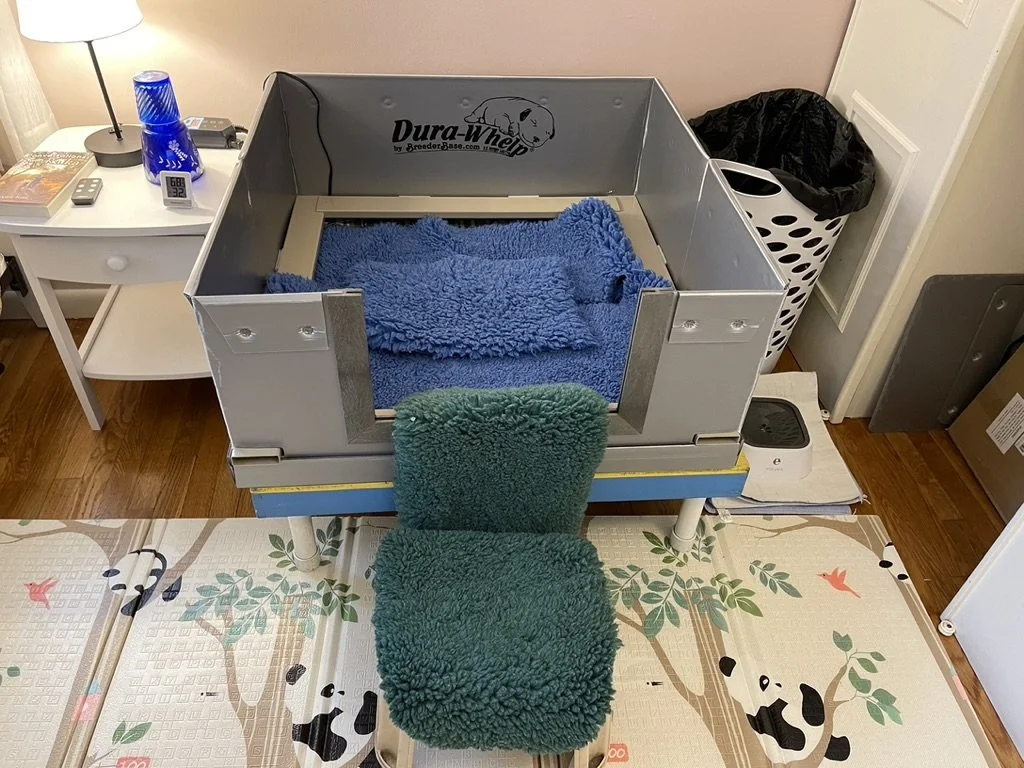
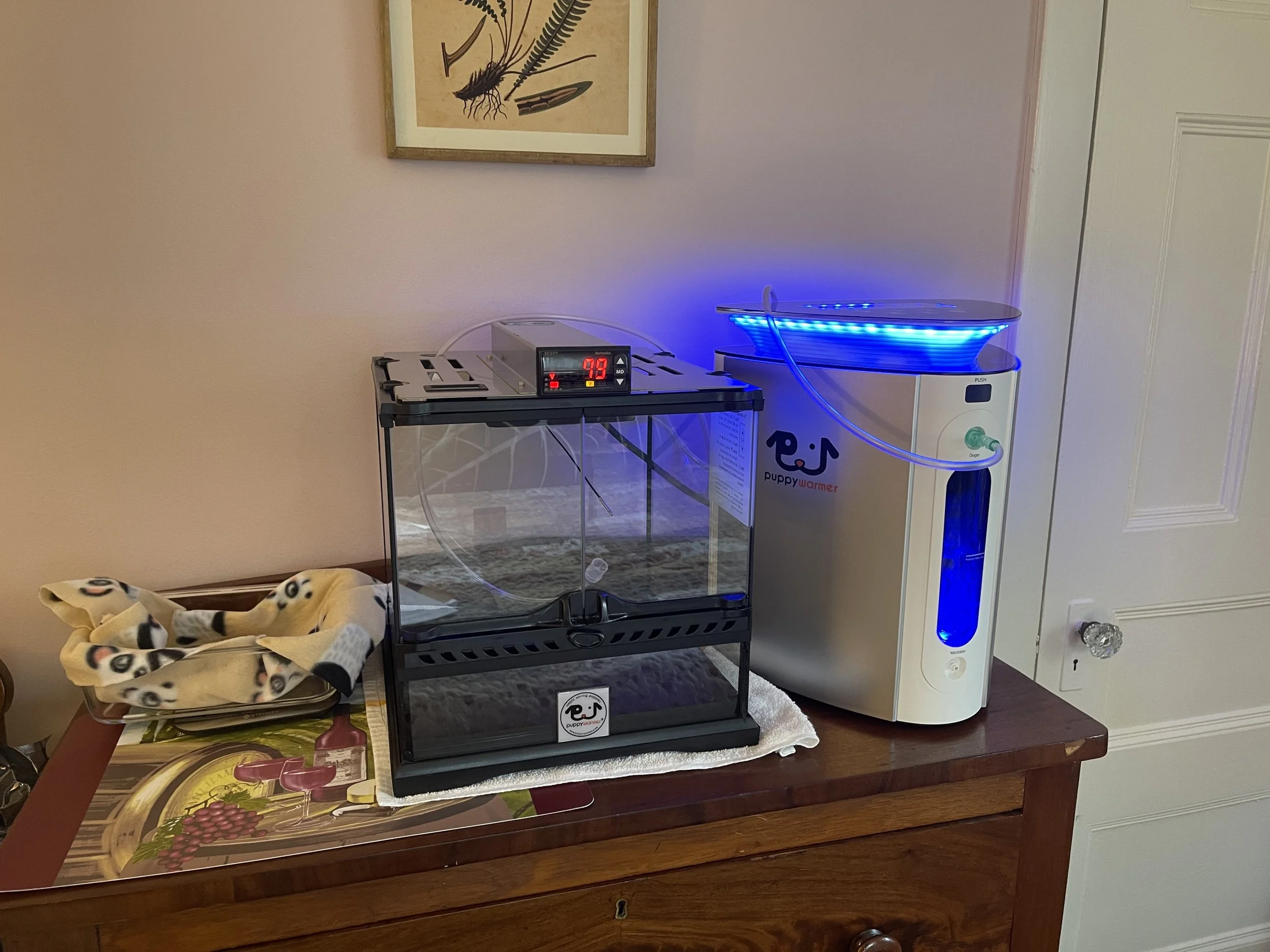
A warming box is on hand to keep the puppies warm in an emergency, and of course a scale to weigh them. There is a space heater to keep the room comfortable for mom and pups, and I have pre-made a batch of “mother’s pudding” to help keep her energy up during labor. I also pre-make, and freeze, a batch of formula for the puppies, just in case someone needs some supplementation. If they don’t (which is usually the case!) it can just be used as part of their initial weaning mush!
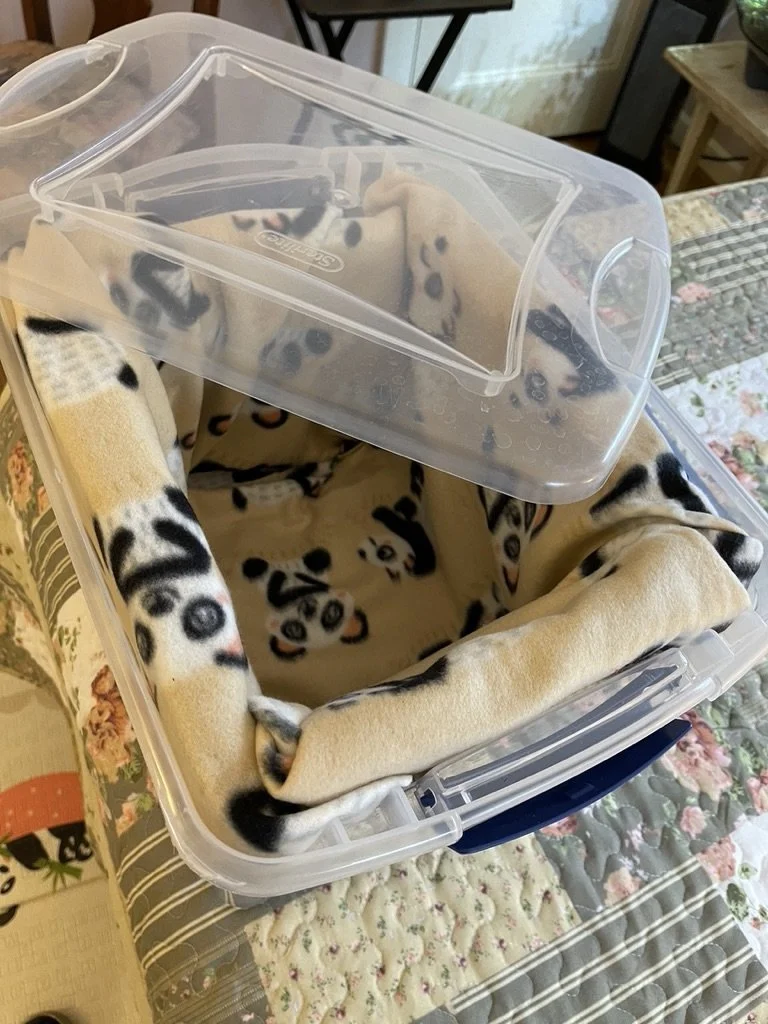
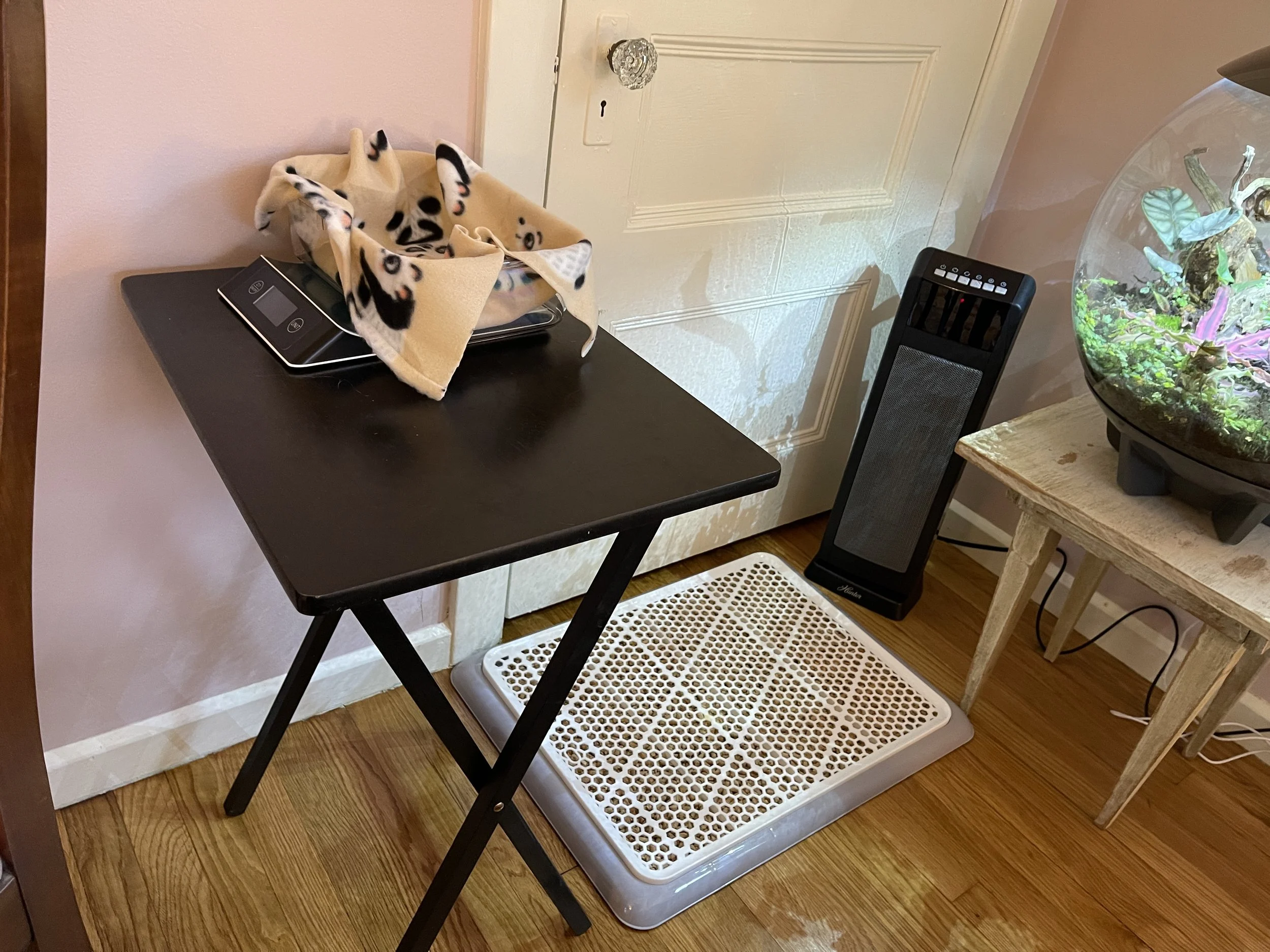
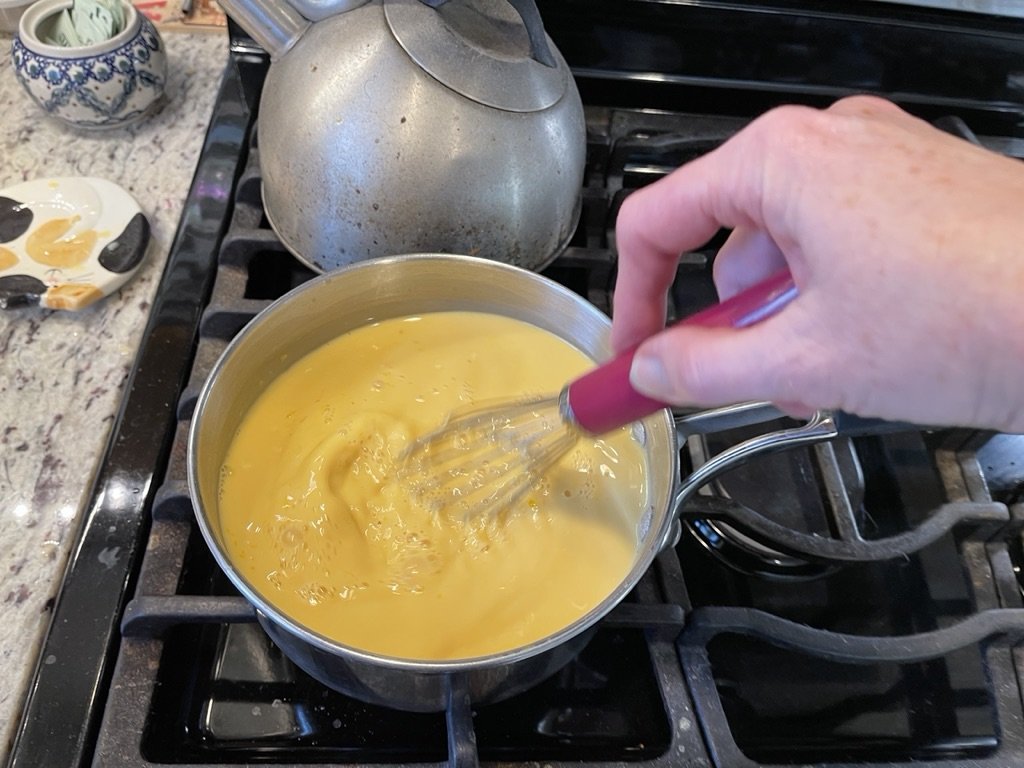
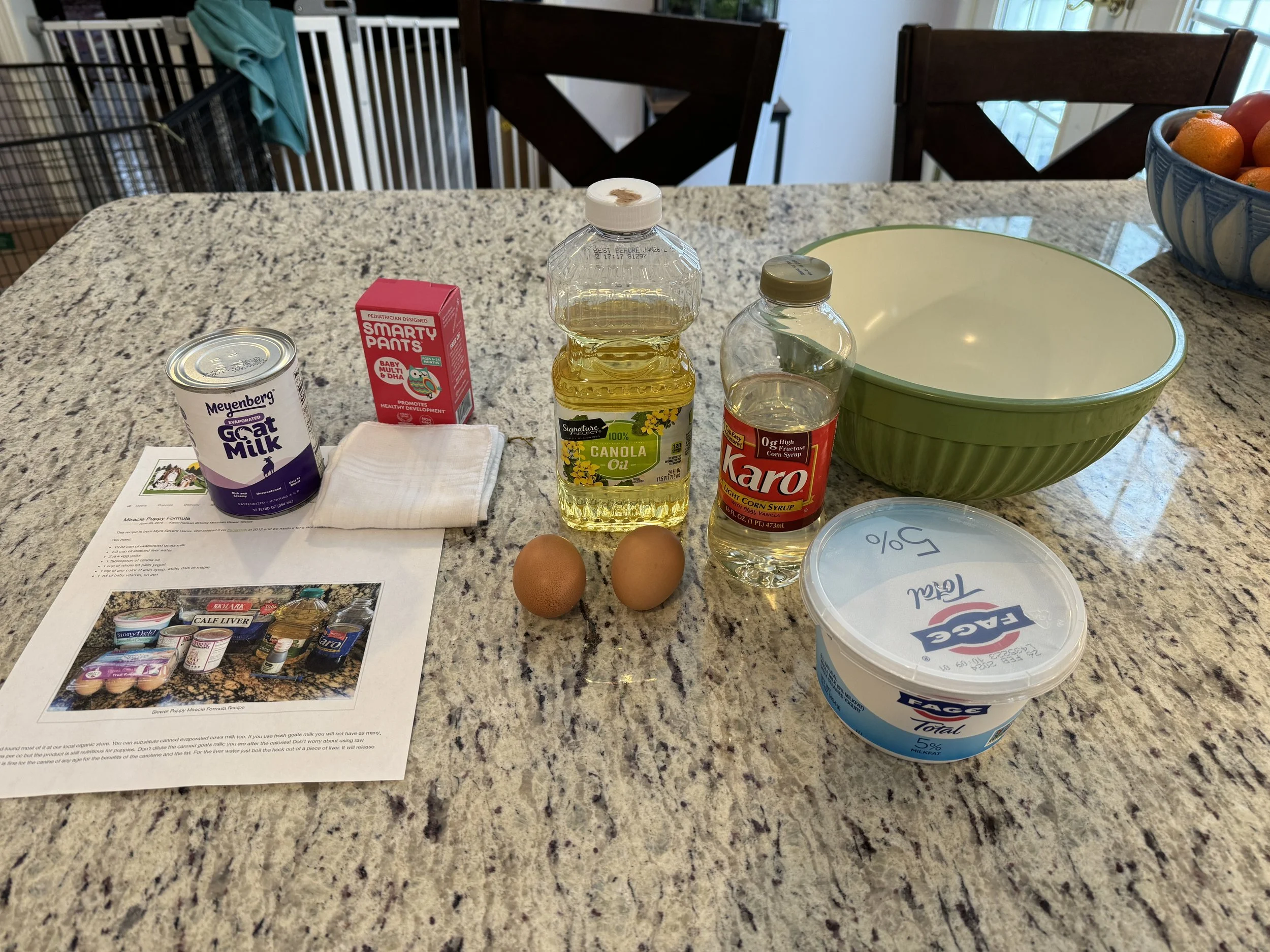
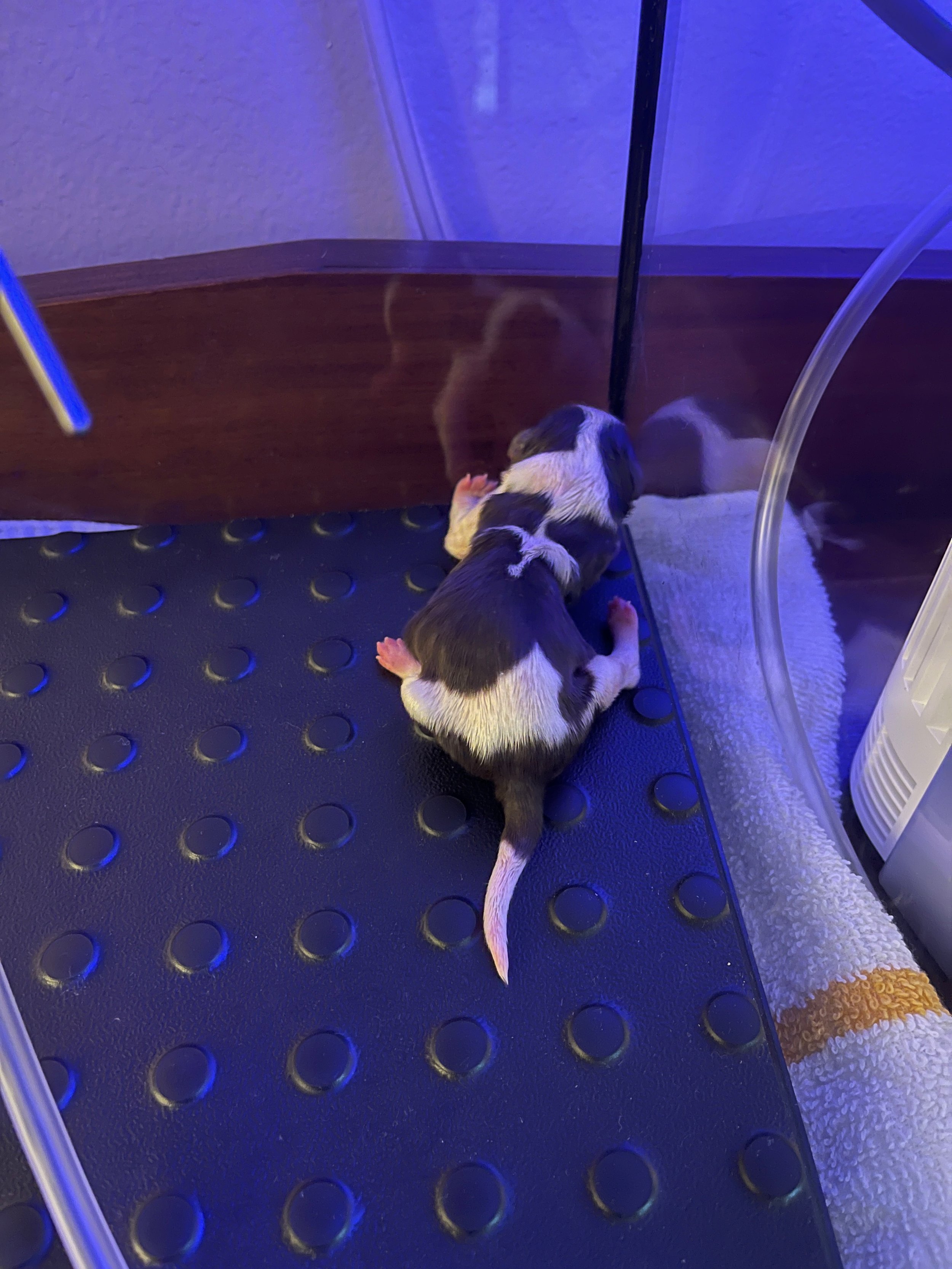
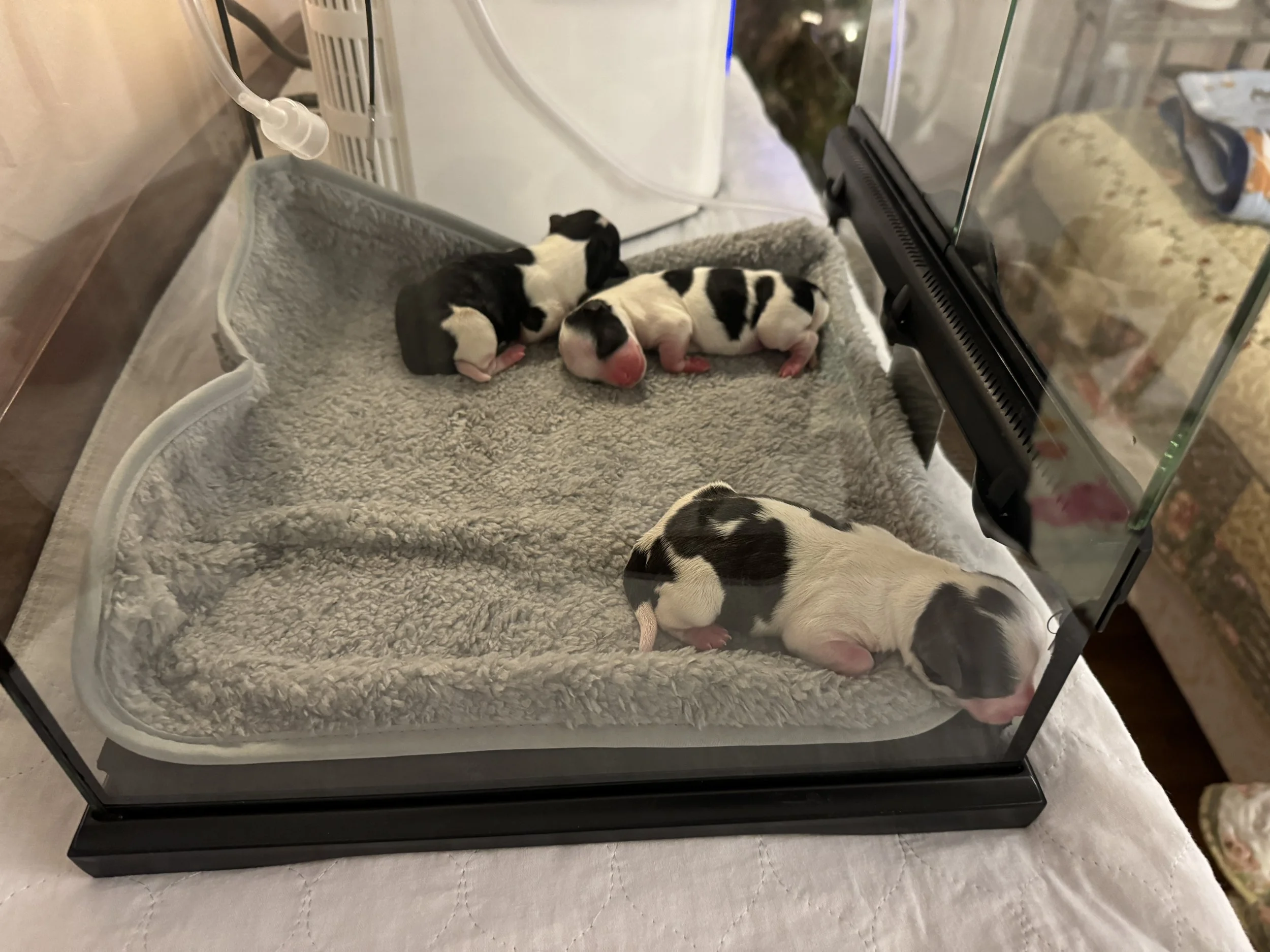
We have come to be strong believers in the Puppy Warmer incubator with heat and oxygen. This is used for keeping puppies safe and warm while the mom is birthing subsequent puppies. But it is also critical for giving a boost to the occasional puppy that has a rough start. While few puppies need it, we believe that every puppy deserves the best chance they can get. These puppies grow up to be just as strong and healthy as their siblings. They just sometimes have a tougher time during the birth process!
Here is a chance to enjoy a video of one of our mamas with her lovely litter of newborns!
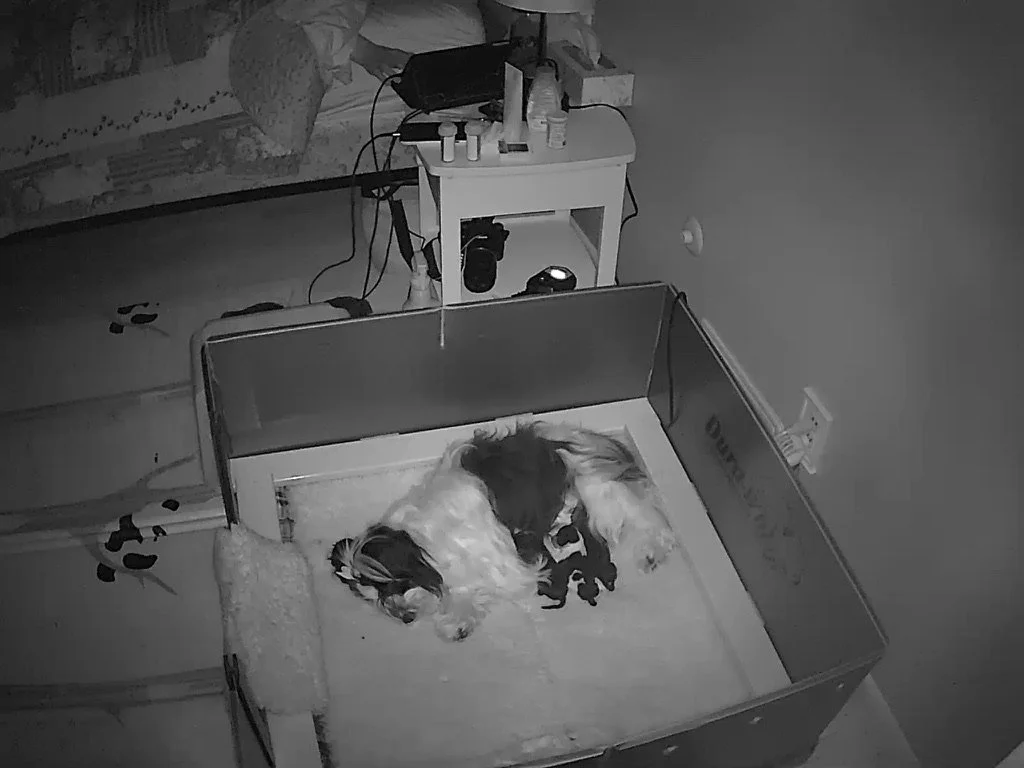
For the first couple of weeks I sleep in the room with the puppies. Then I keep a puppy cam on the puppies 24/7 in any case. Our whelping room is right around the corner from our bedroom so it is easy for us to hear what is going on. I try to give my puppy owners access to the puppy cam too, so that they can watch their puppy growing up!
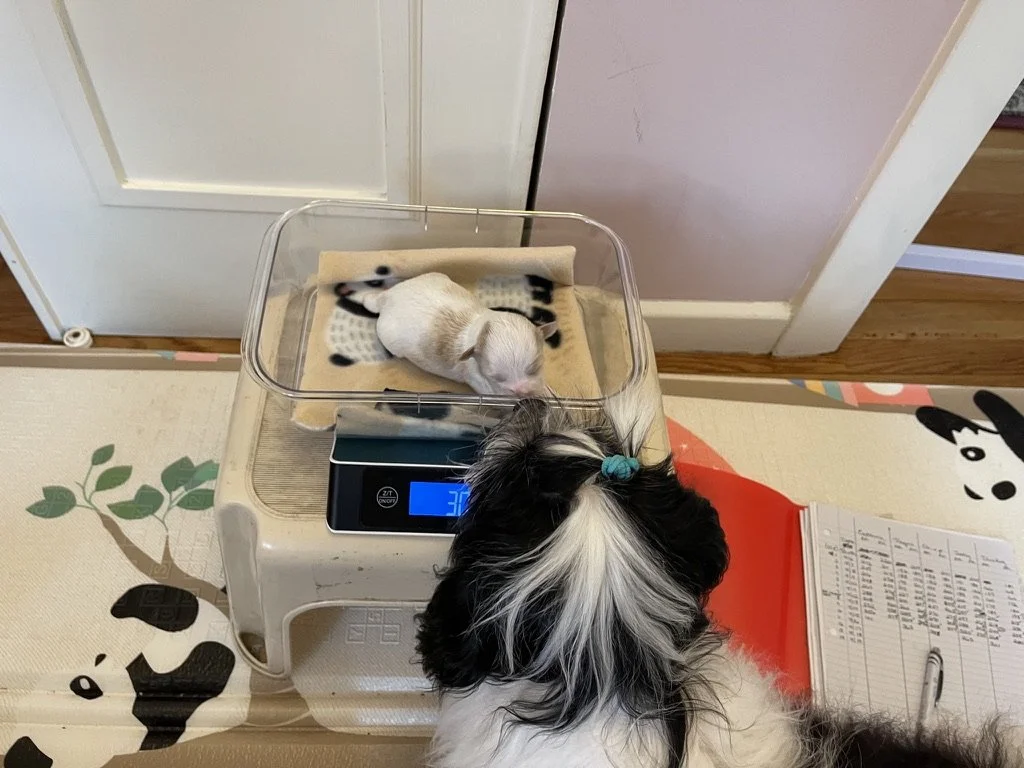
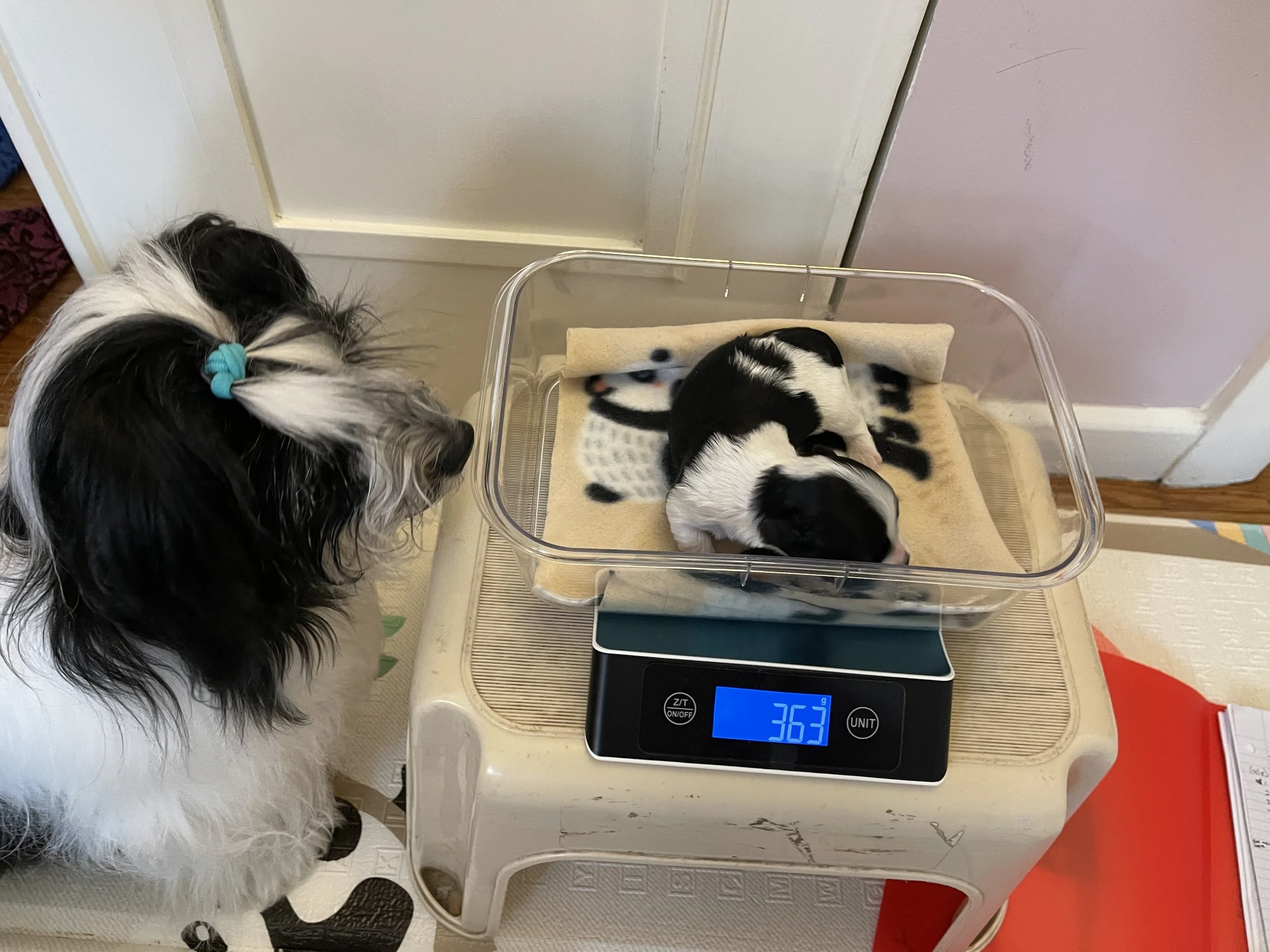
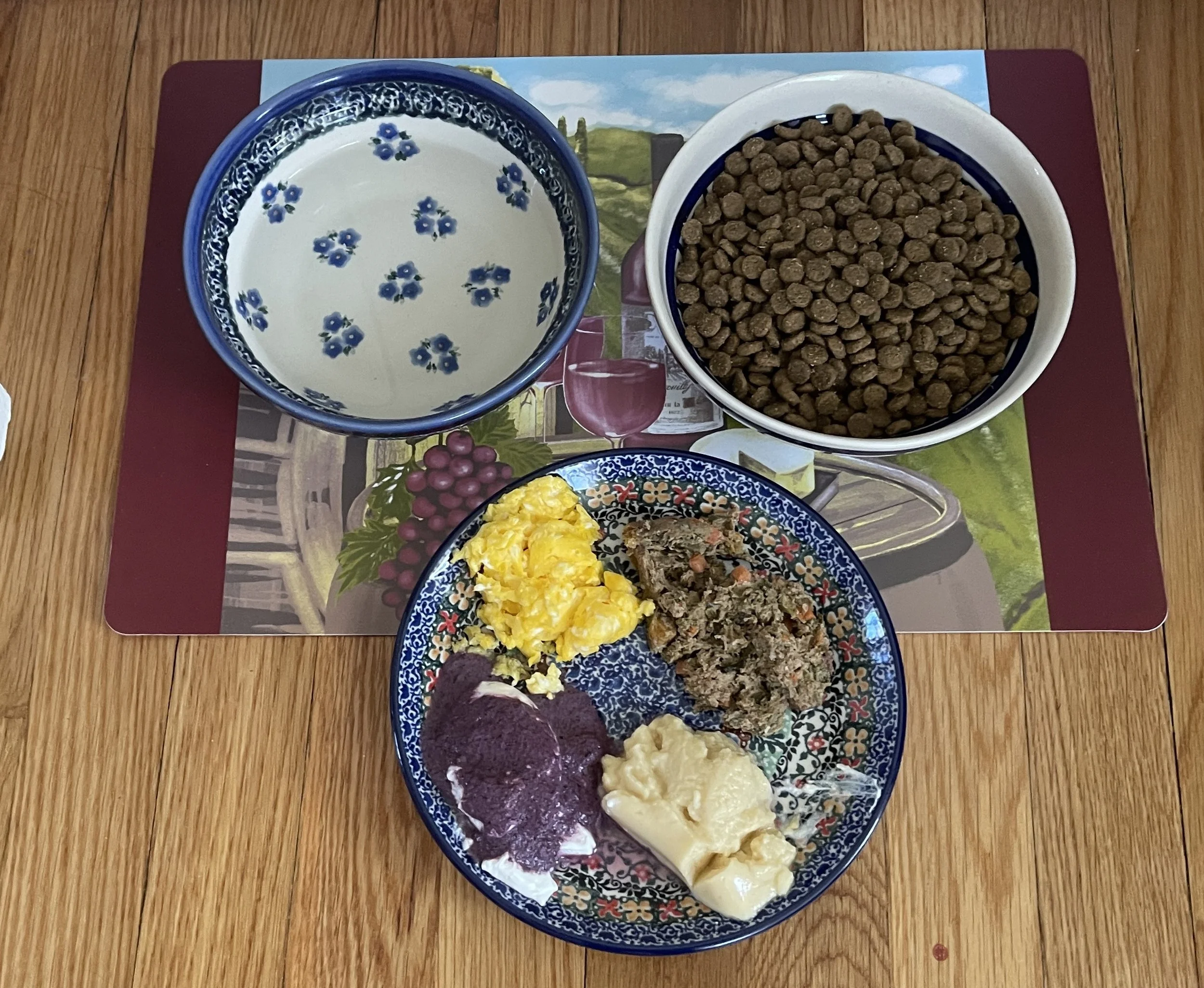
You can see mom supervising as I weigh the puppies. We keep the scale close to the floor while weighing, so she can see everything that’s going on, and it doesn’t make her worry about her puppies. Because we want her to produce as much milk as possible, we start feeding her a smorgasbord of protein and calcium-rich healthy snacks as wells her regular meals. While we don’t normally feed kibble, at this point, while she needs as much food as possible, we keep a big bowl of kibble available to her at all times, as “snack food” that she can munch on whenever she wants!
We do either “ENS” (early neurological stimulation) or “SMS” (simulated maternal stimulation) or both with a litter. While SMS can do no harm, we do not do ENS with a litter that has been stressed in any way during a difficult birth process. Read more here. We keep things calm and peaceful in the whelping room, playing soft classical music for mom and pups and keeping the other adult dogs away.
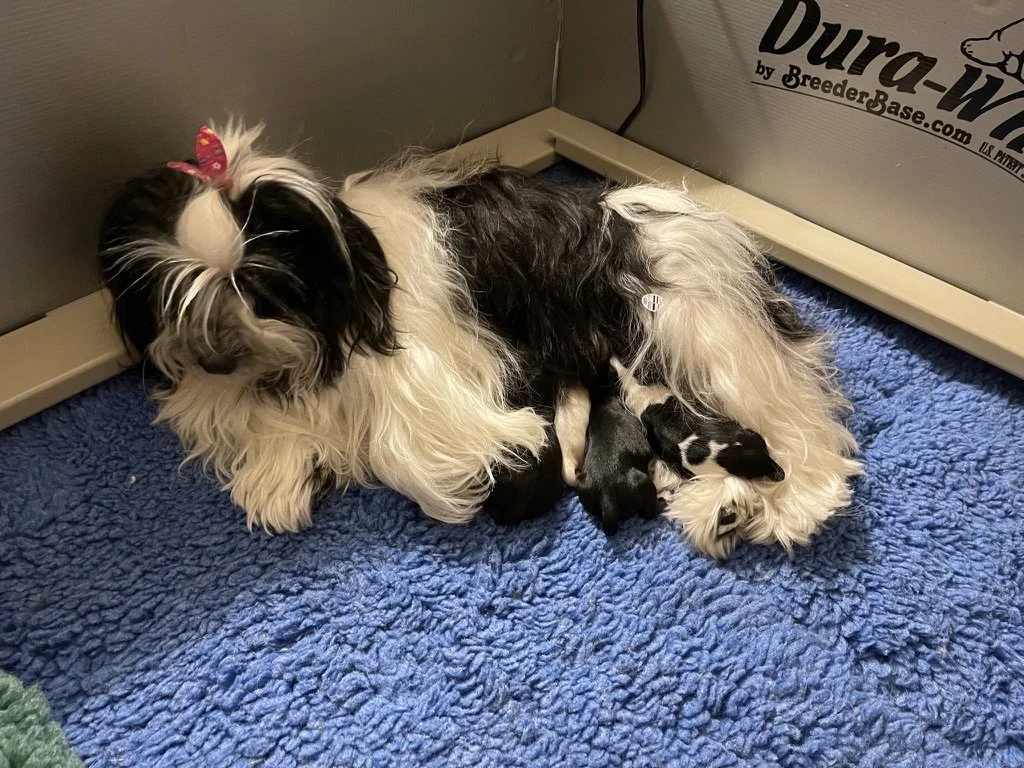

The other dogs would all like to be involved, and of course they would like to be with me. But that isn’t possible during these first few weeks. So we make sure that they have a cozy place to hang out in the hallway outside the whelping room!
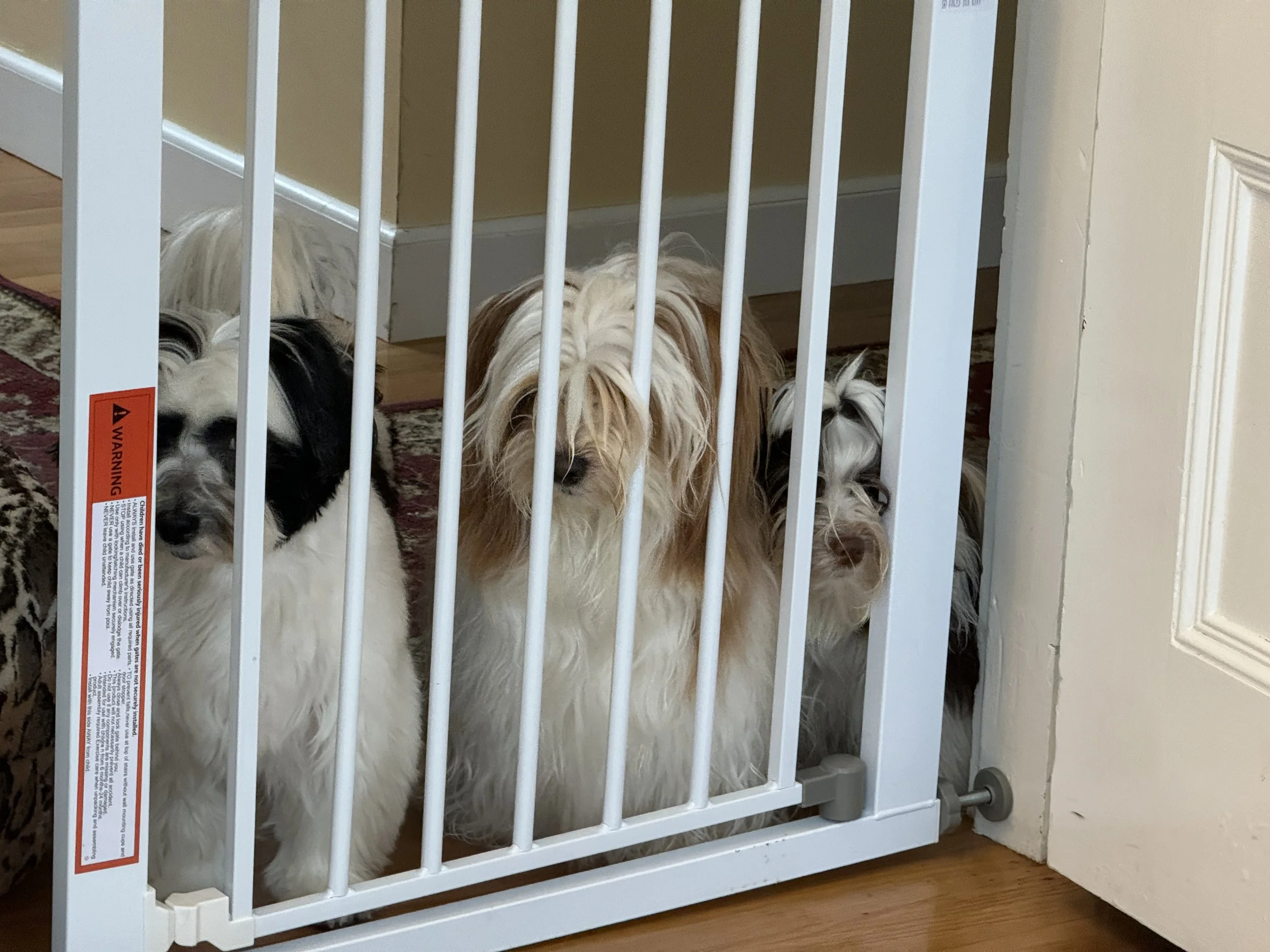
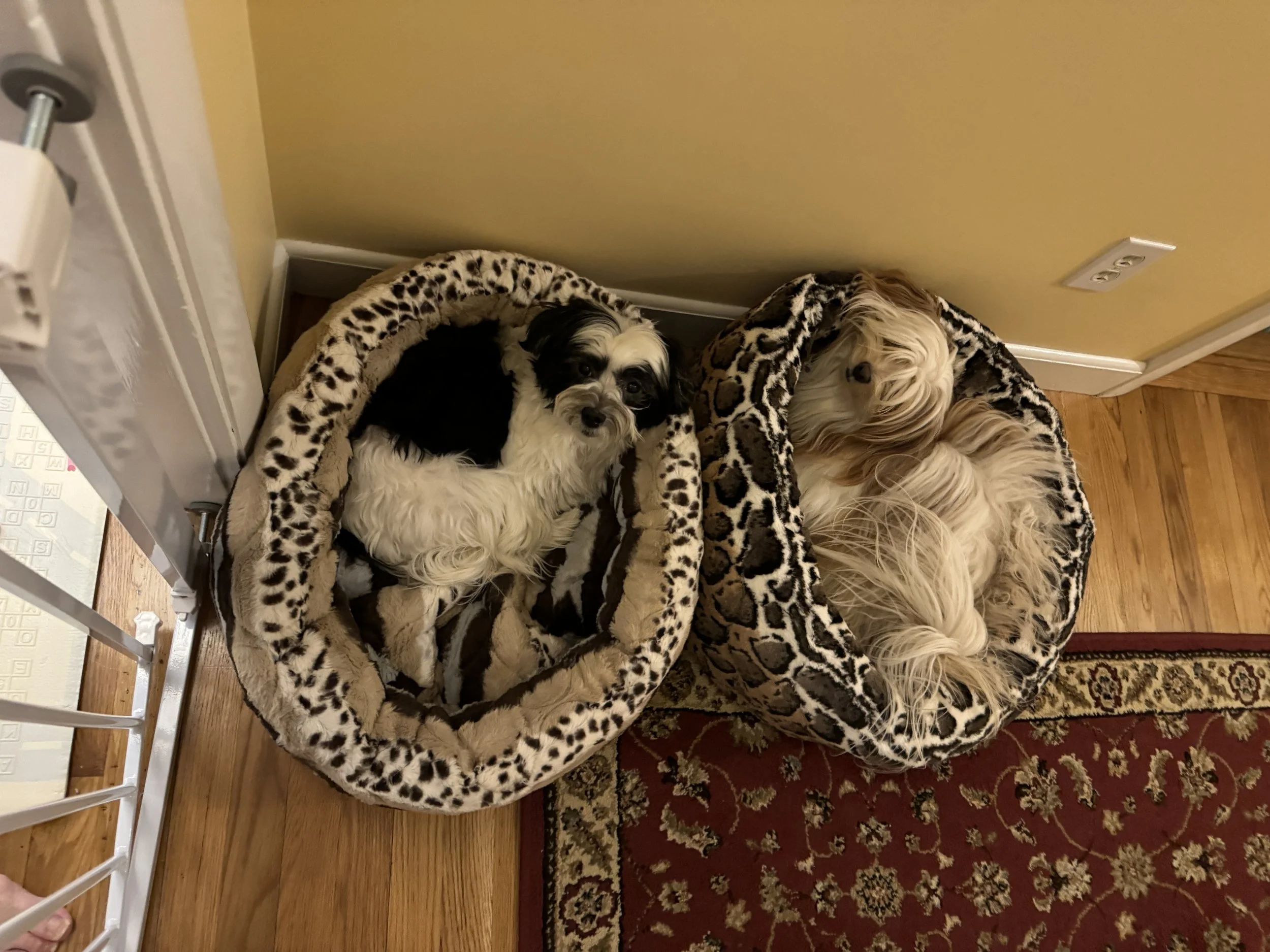
It’s also Important for Mom to have a comfy place to take a break from the “kids” from time to time. Being a mom is hard work! She wants to be very close to them, so that she can hear them and keep her eye on them. But as long as she knows they are fed and taken care of, she sometimes wants to take a nap by herself, just like human moms!
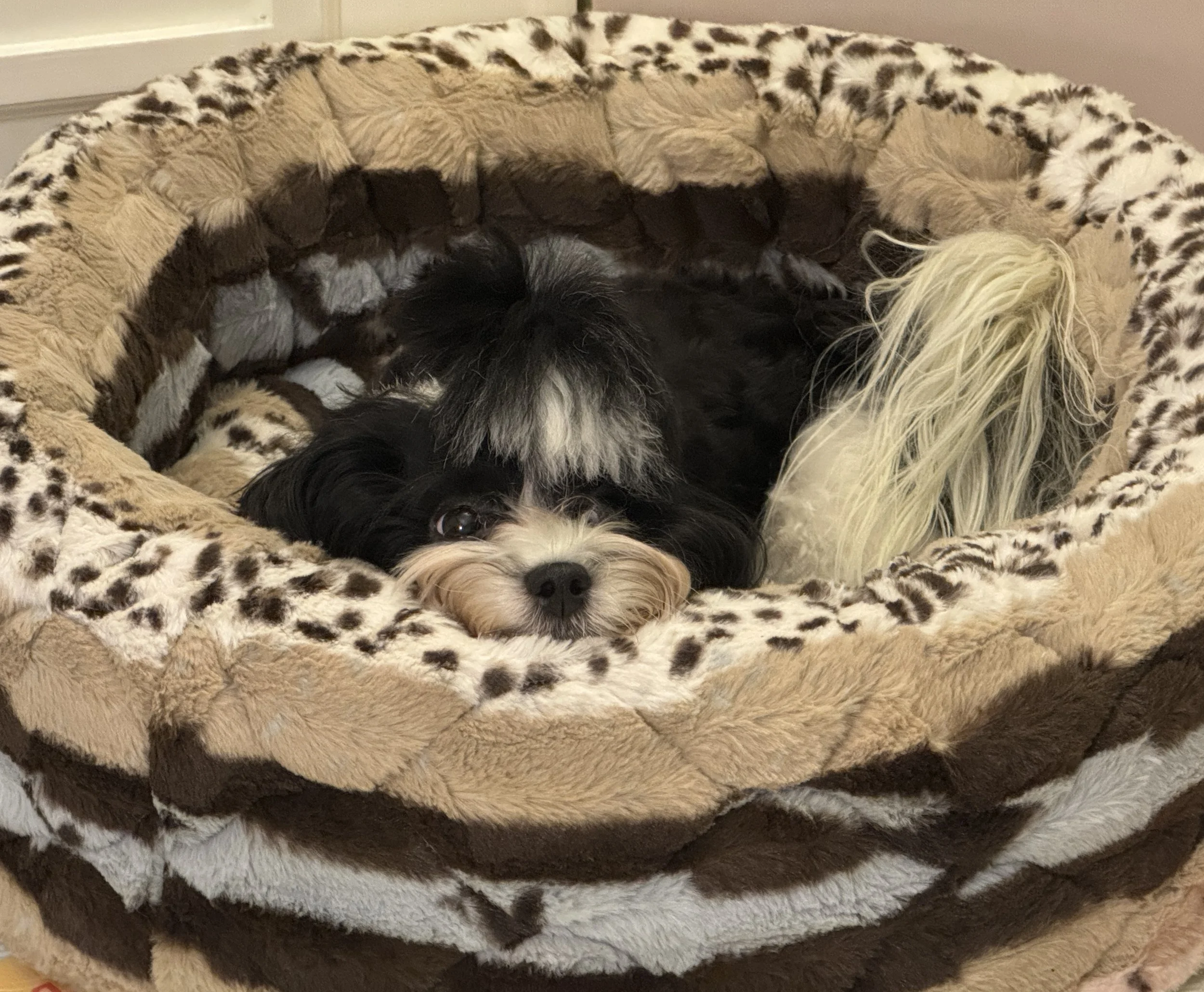
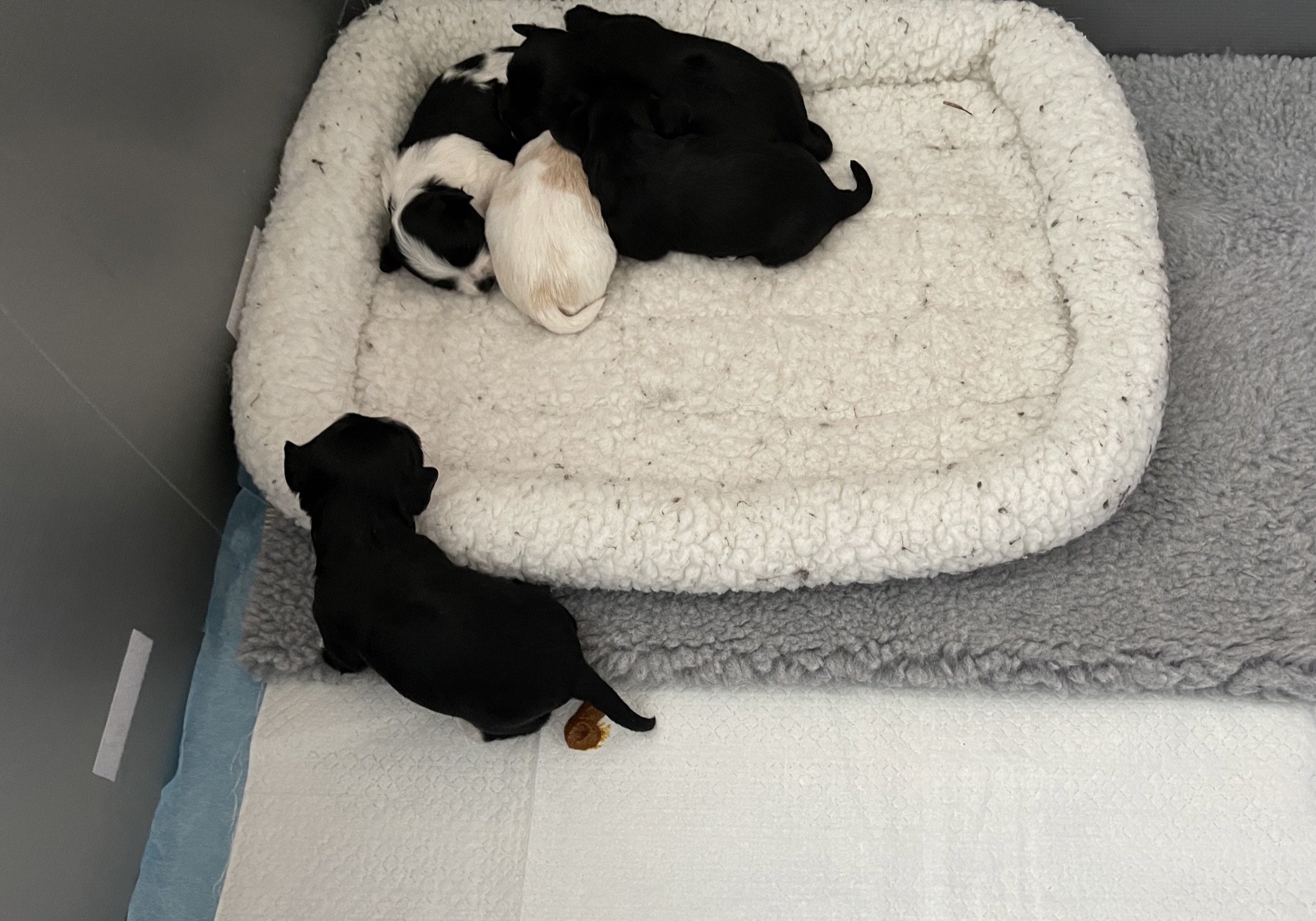
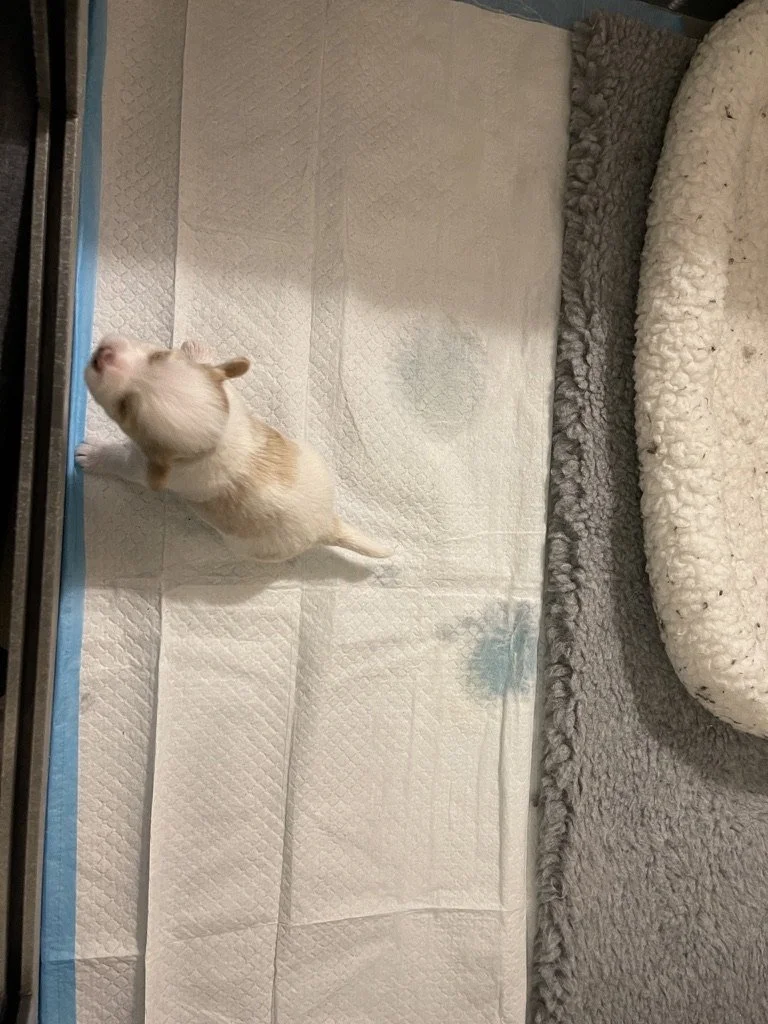
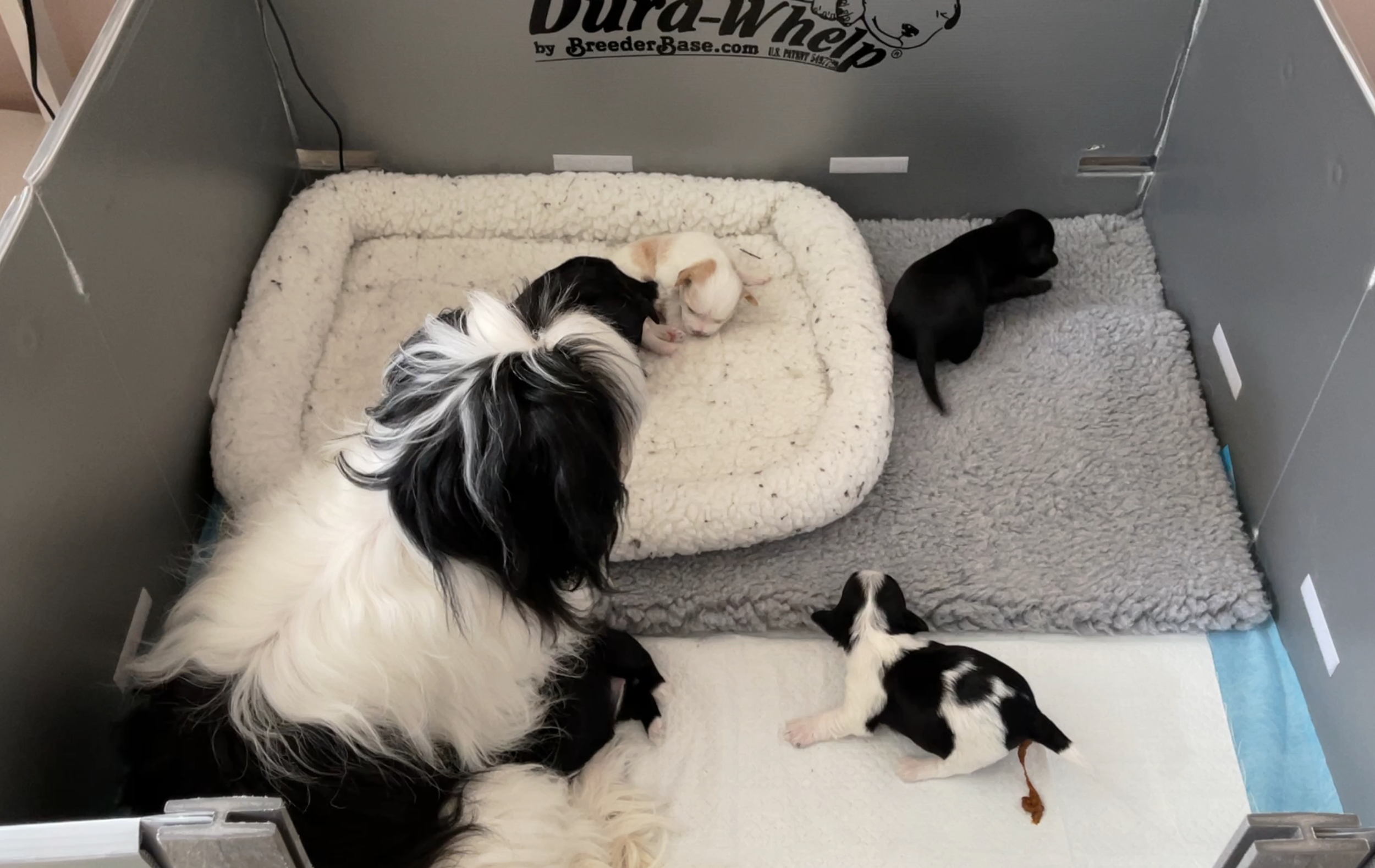
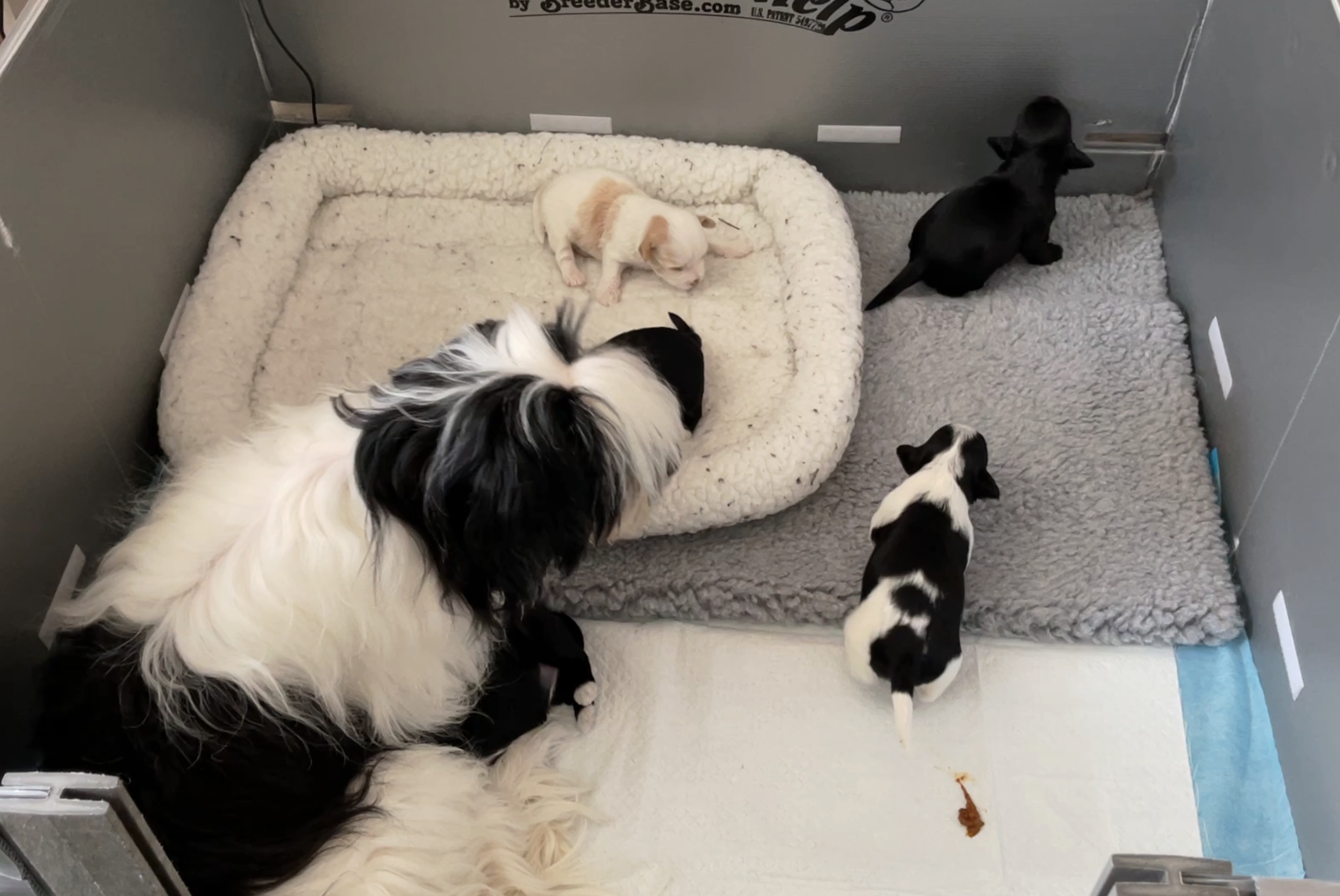
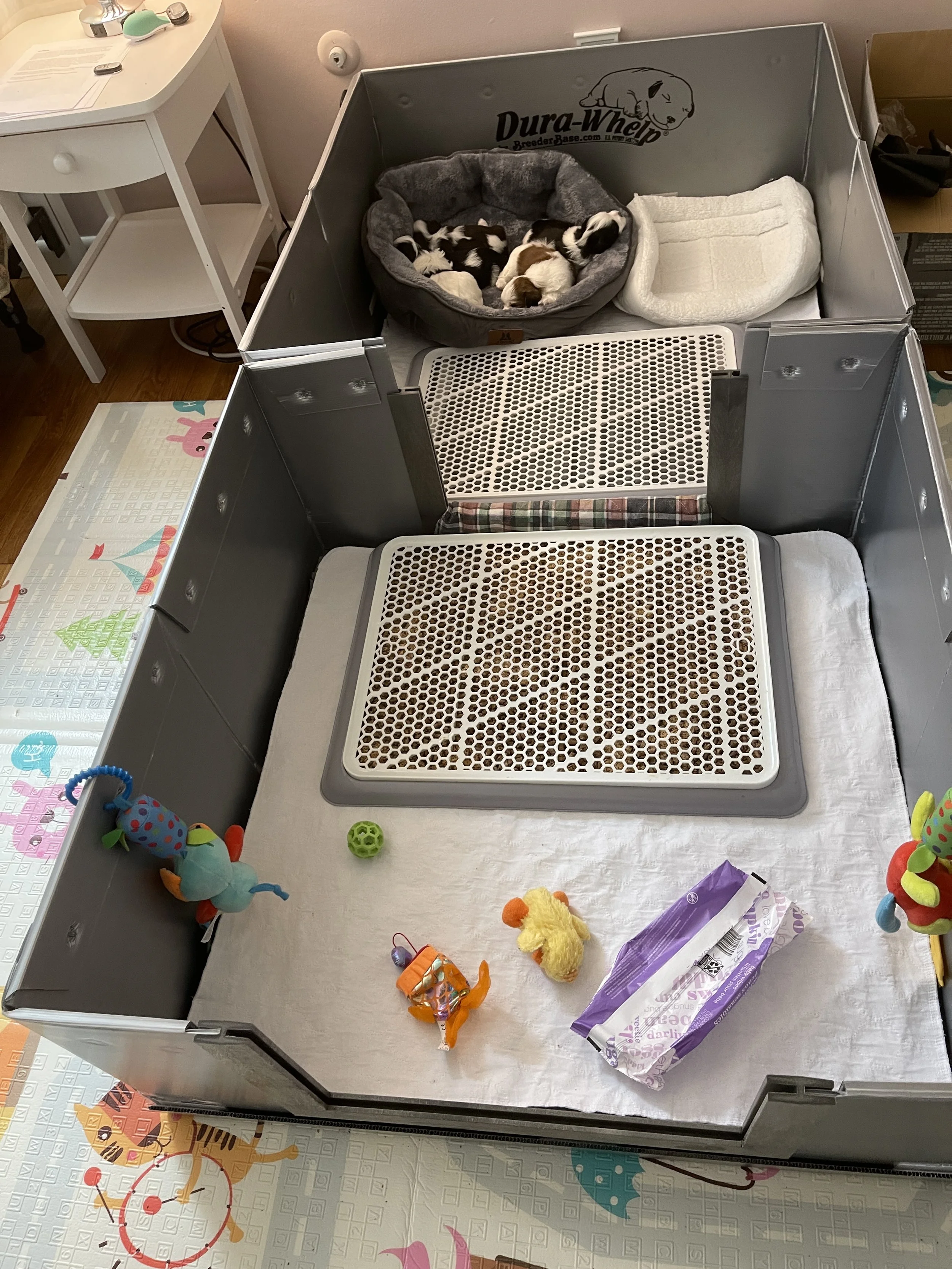
In the second and third week potty training starts! It is amazing how strong the urge is for puppies to keep their nest clean. They really are not going TO a potty at this point, but instinctively AWAY from their bed. You can see them below at 2 1/2 weeks, eyes barely open, toddling off their bed to pee and poop. As soon as we see this behavior we make a smaller bed area, and a defined potty area to help them start to make that association. We also make sure that the bedding stays scrupulously clean to reaffirm their natural instincts. There are, of course, occasional messes, and mom is still doing a great job cleaning things up too. But it is up to us to make sure bedding gets changed as soon as possible. The cleaner the pups’ area is kept, the more they will value cleanliness in their surroundings!
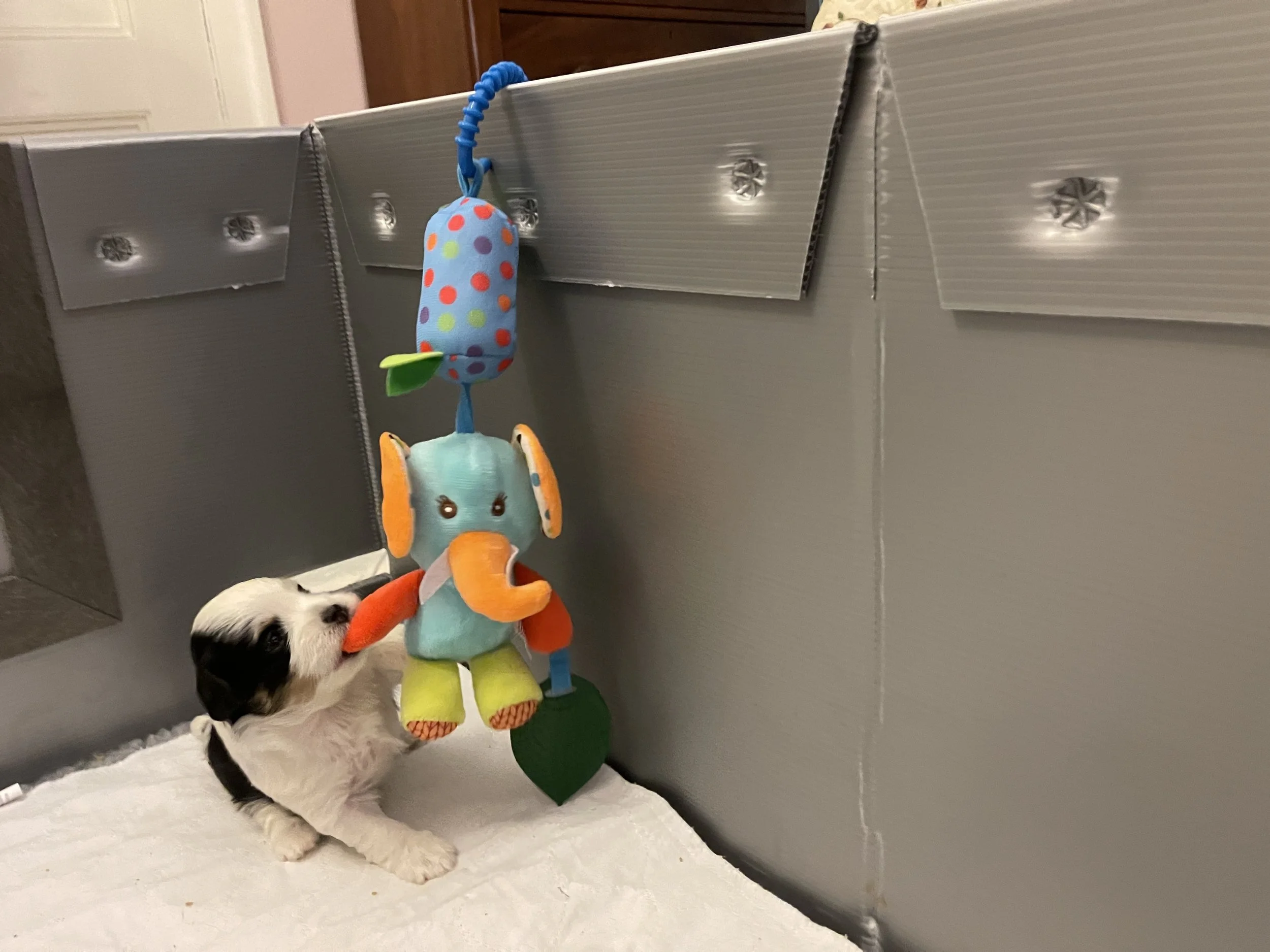
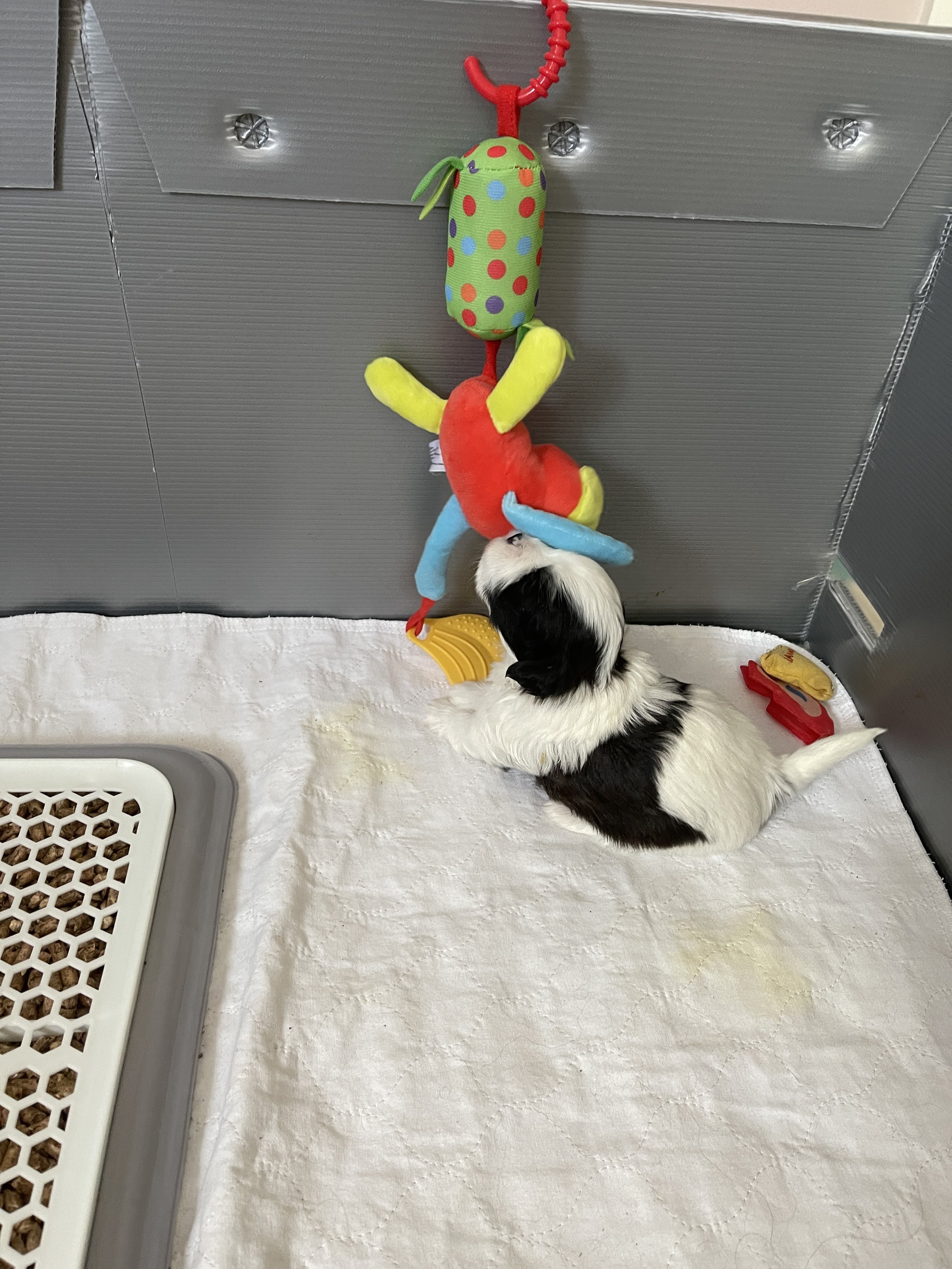
Also during this second and third week, as they become more mobile, they start to be interested in new things in their environment. Things that crackle and make little bell noises, things that they can mouth and have different textures become so much fun. These are changed daily so there is always something new for them to learn from. They still sleep most of the time.
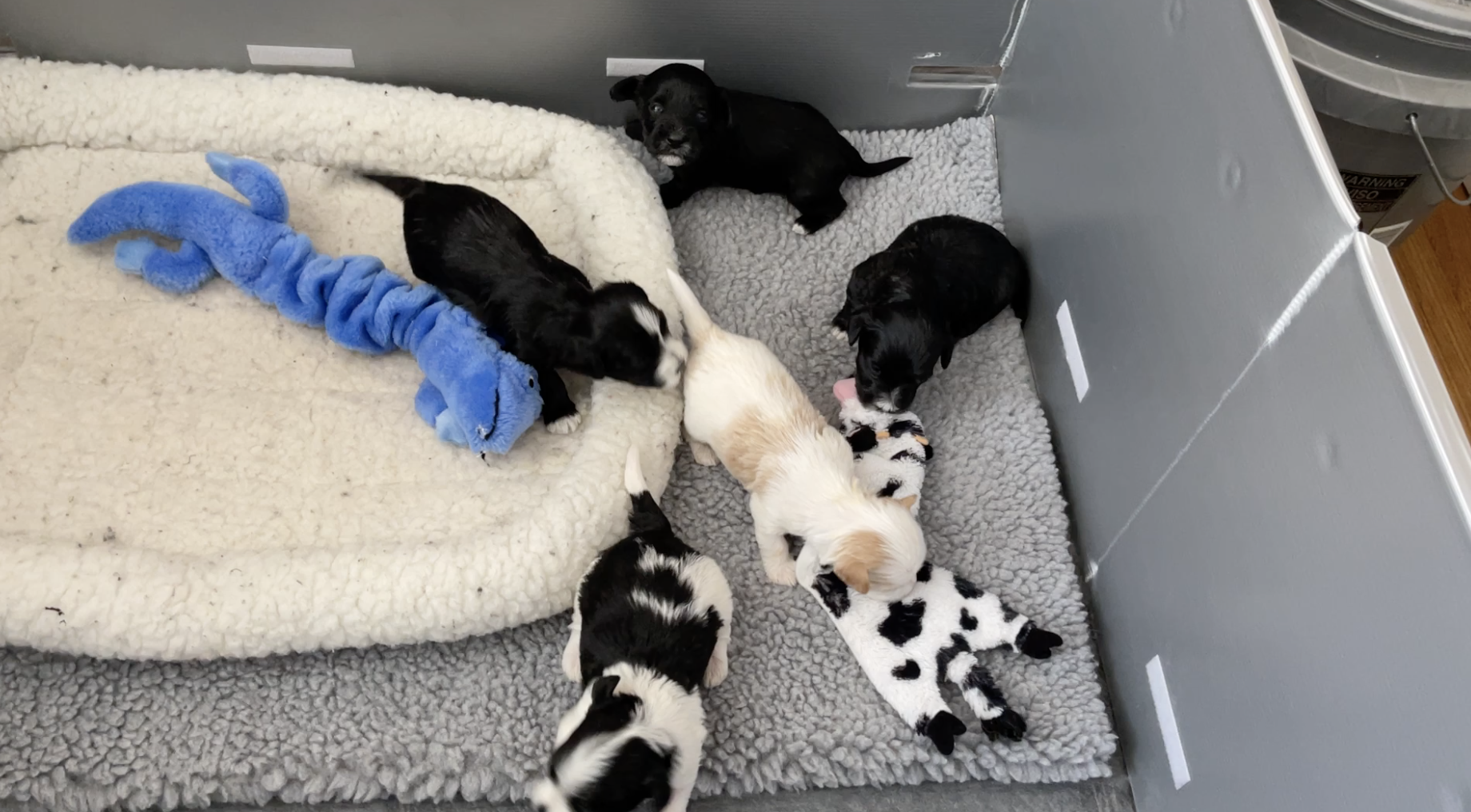
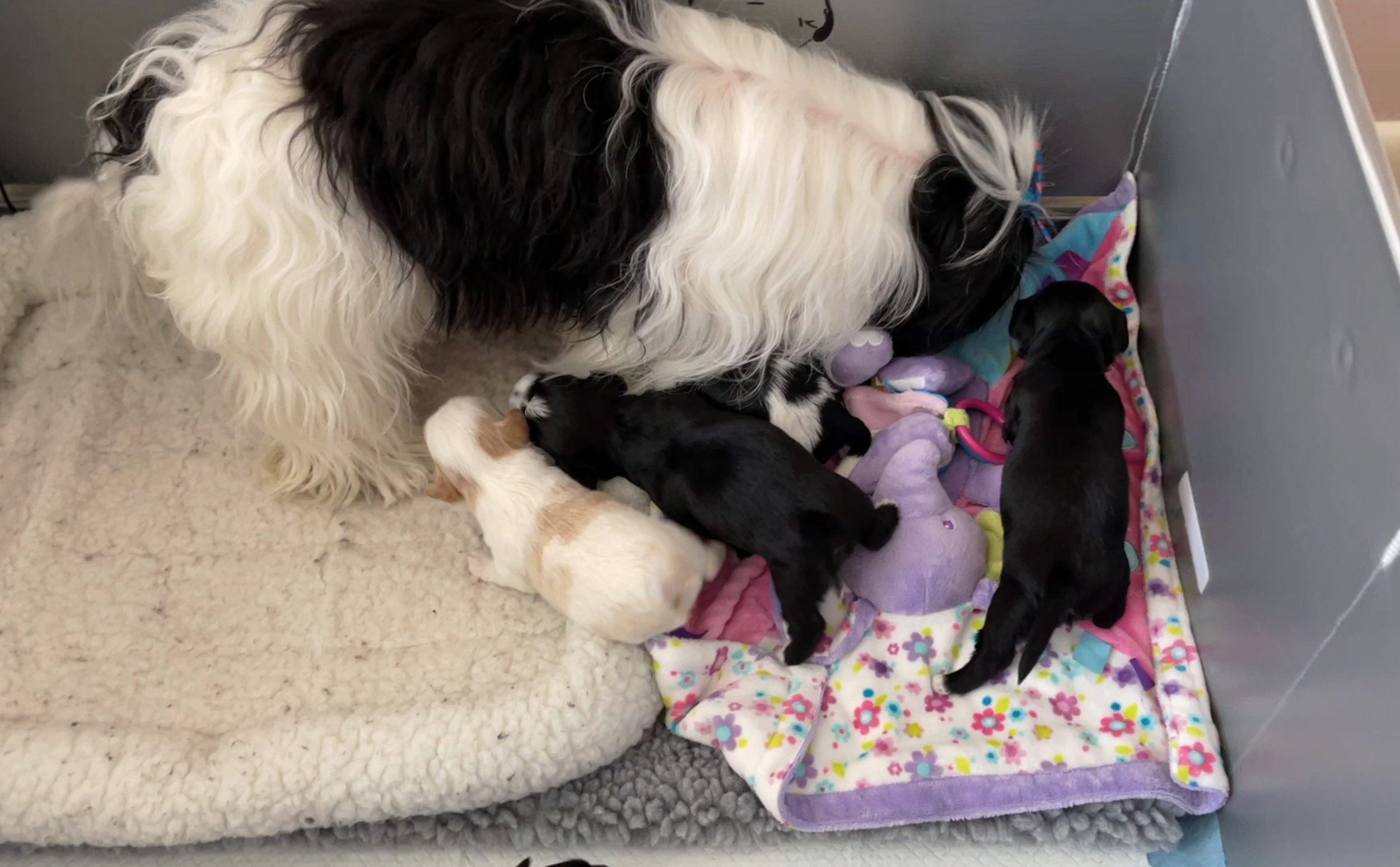
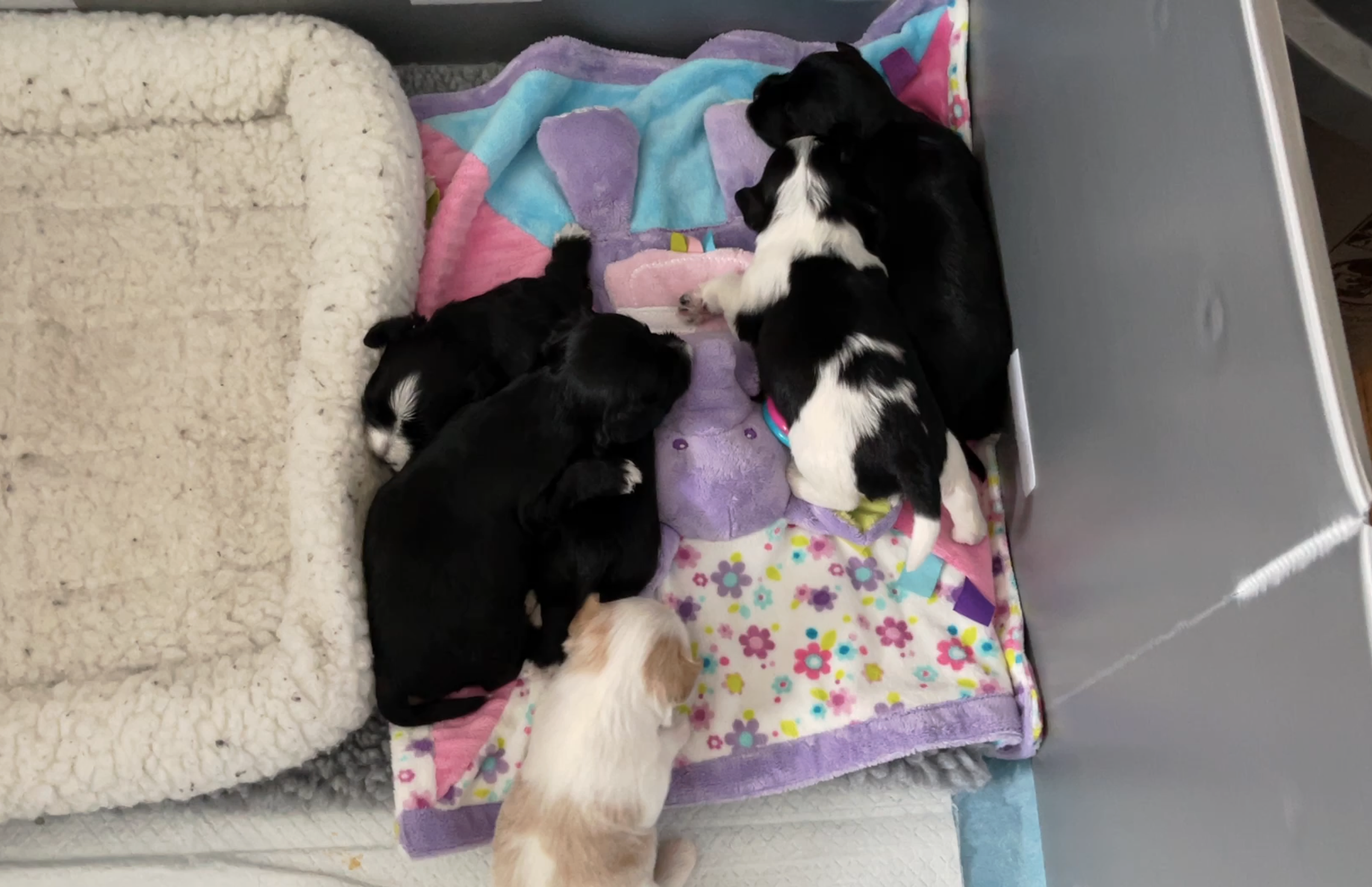
Toward the end of their third week we introduce their first food, starting with plain goat’s milk, followed by a slurry of puppy mush and goats milk. Monster mash! A good time is had by all, but in the beginning, they often wear as much as they lap up, I’m afraid.
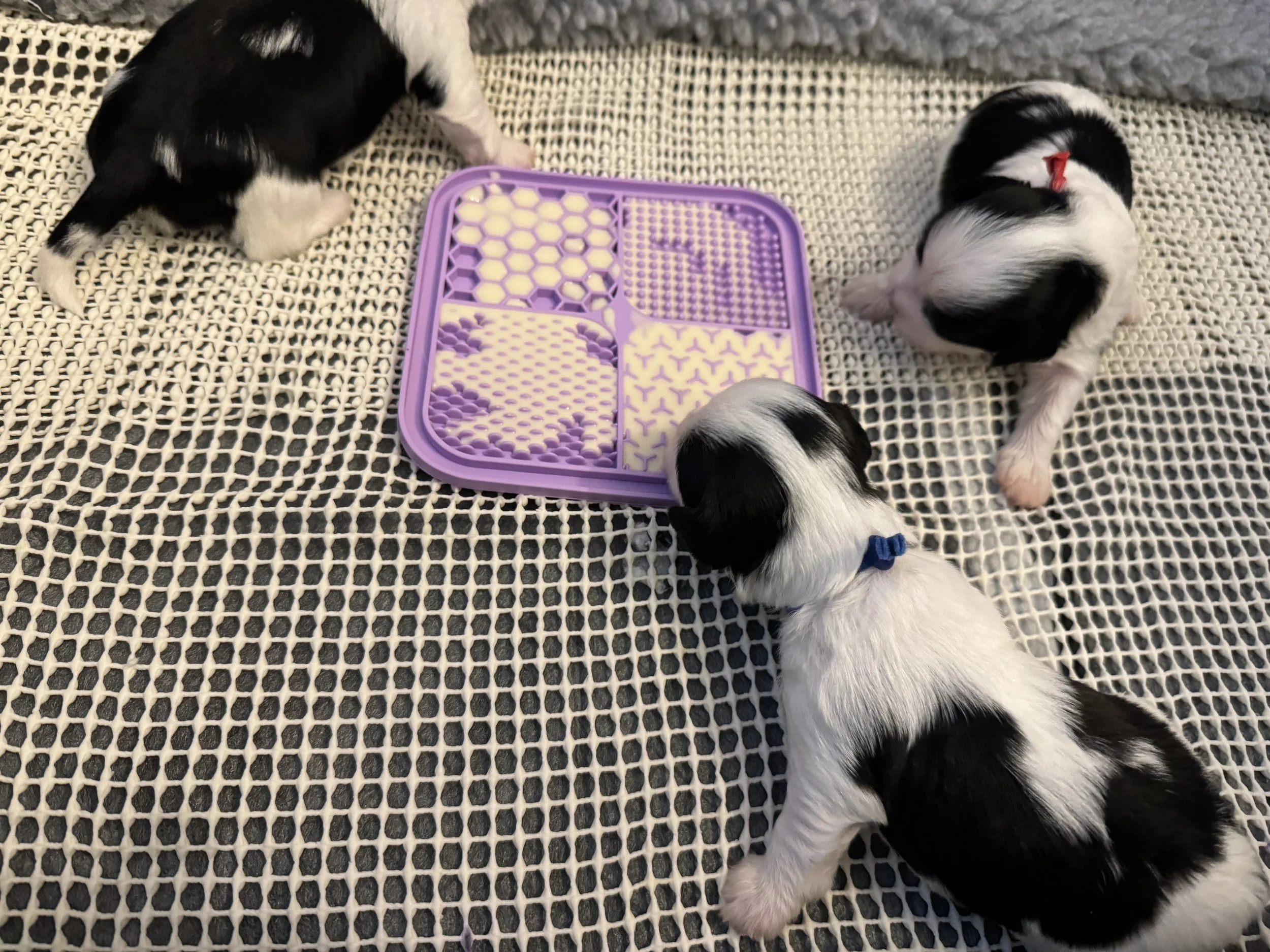
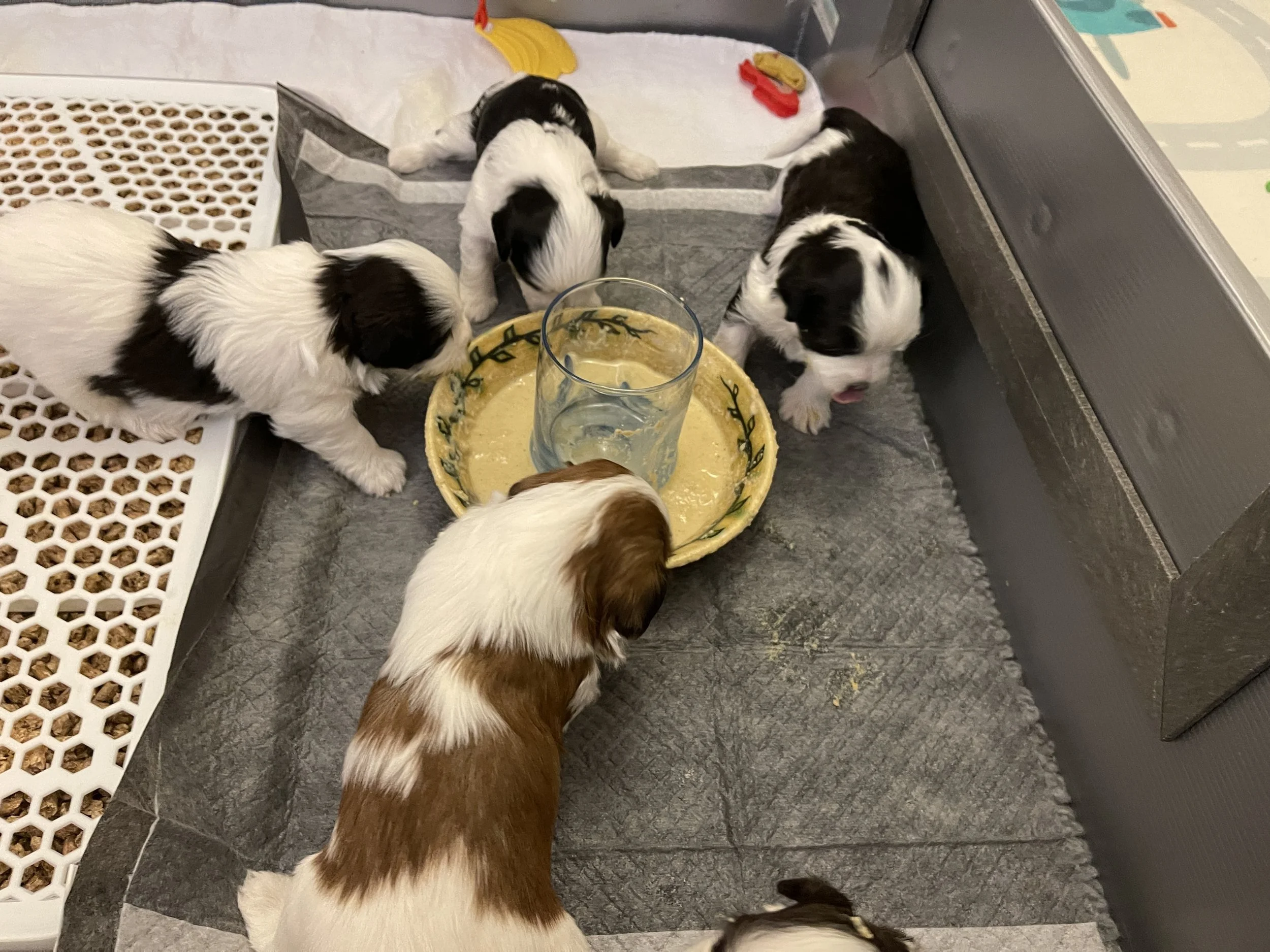
At this point they are starting to need more space too. They are still wobbly, but up on their little legs, getting into little play fights and popping around. We begin to let them have “outings” on the whelping room floor, and with Mama’s permission, our wonderful, gentle, stud dog, Ducky, is allowed in for visits.
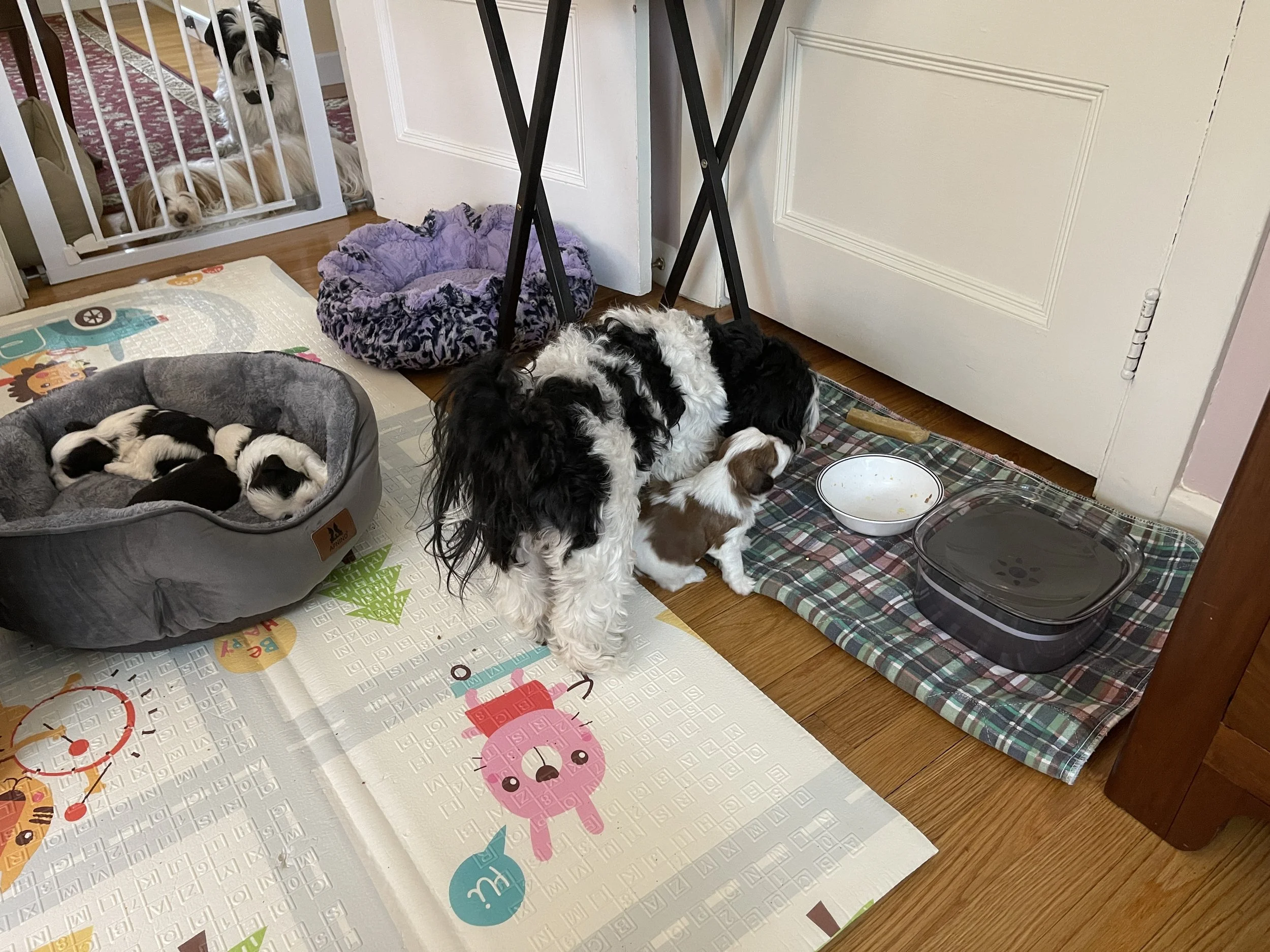
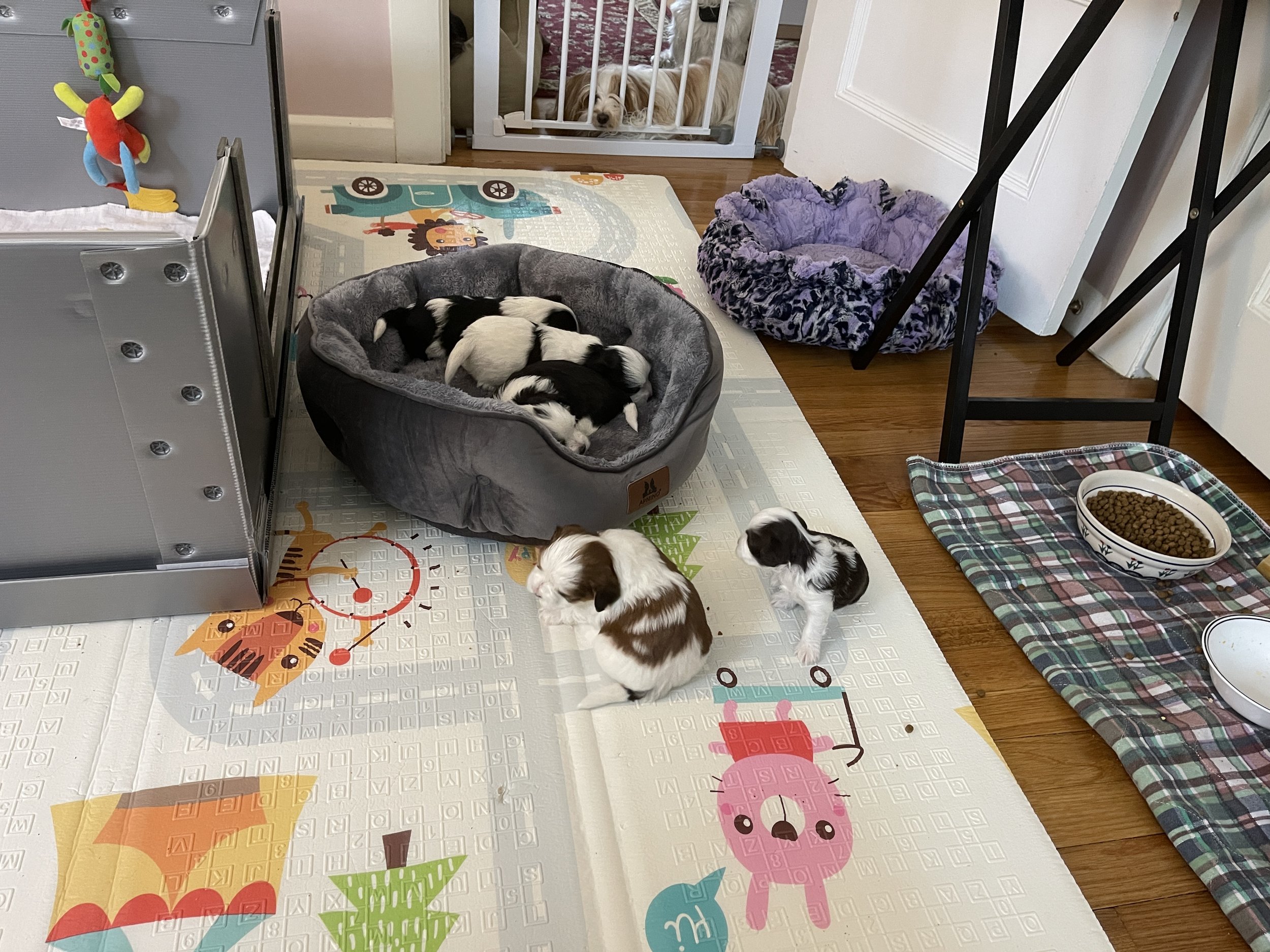
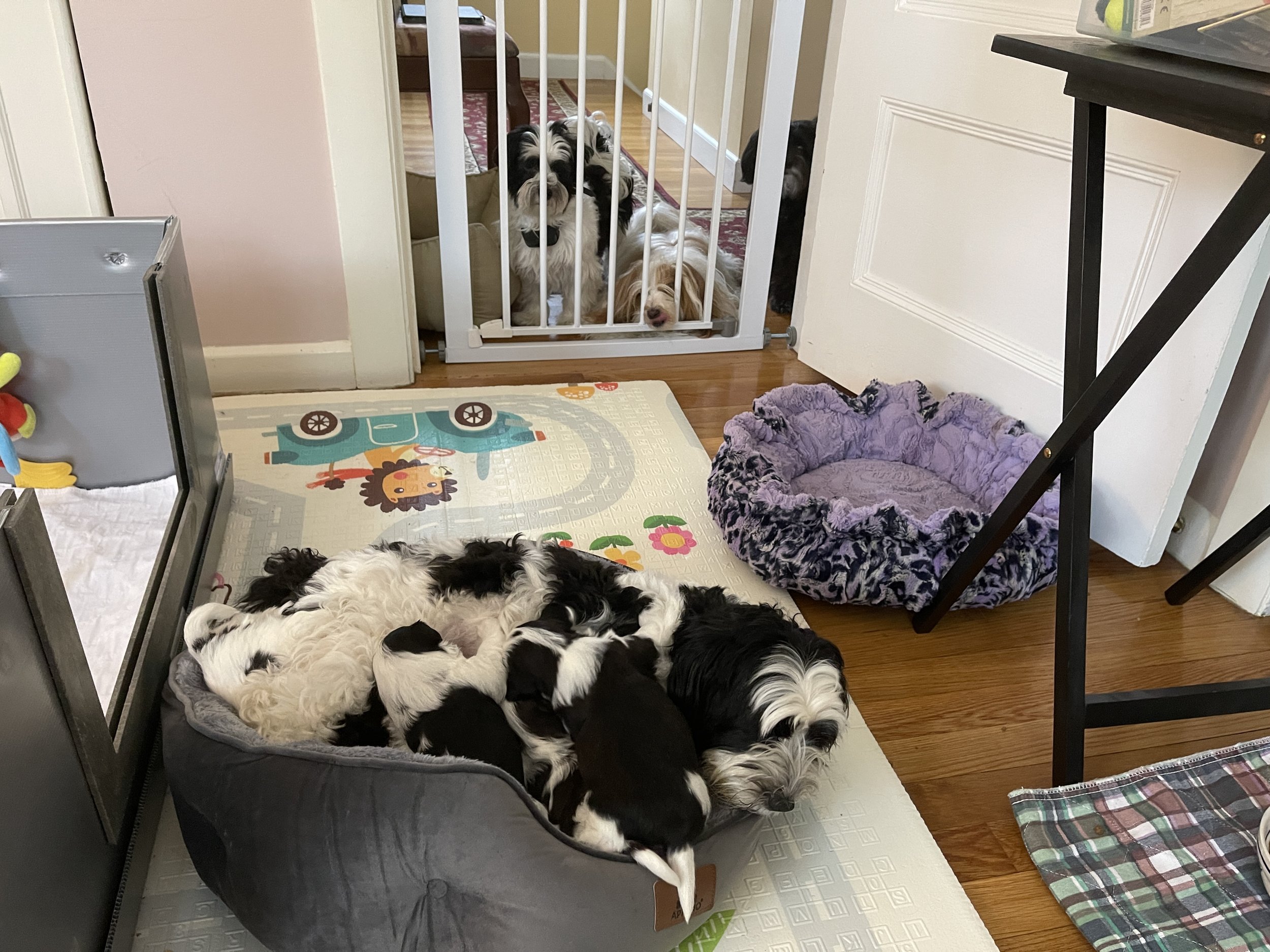
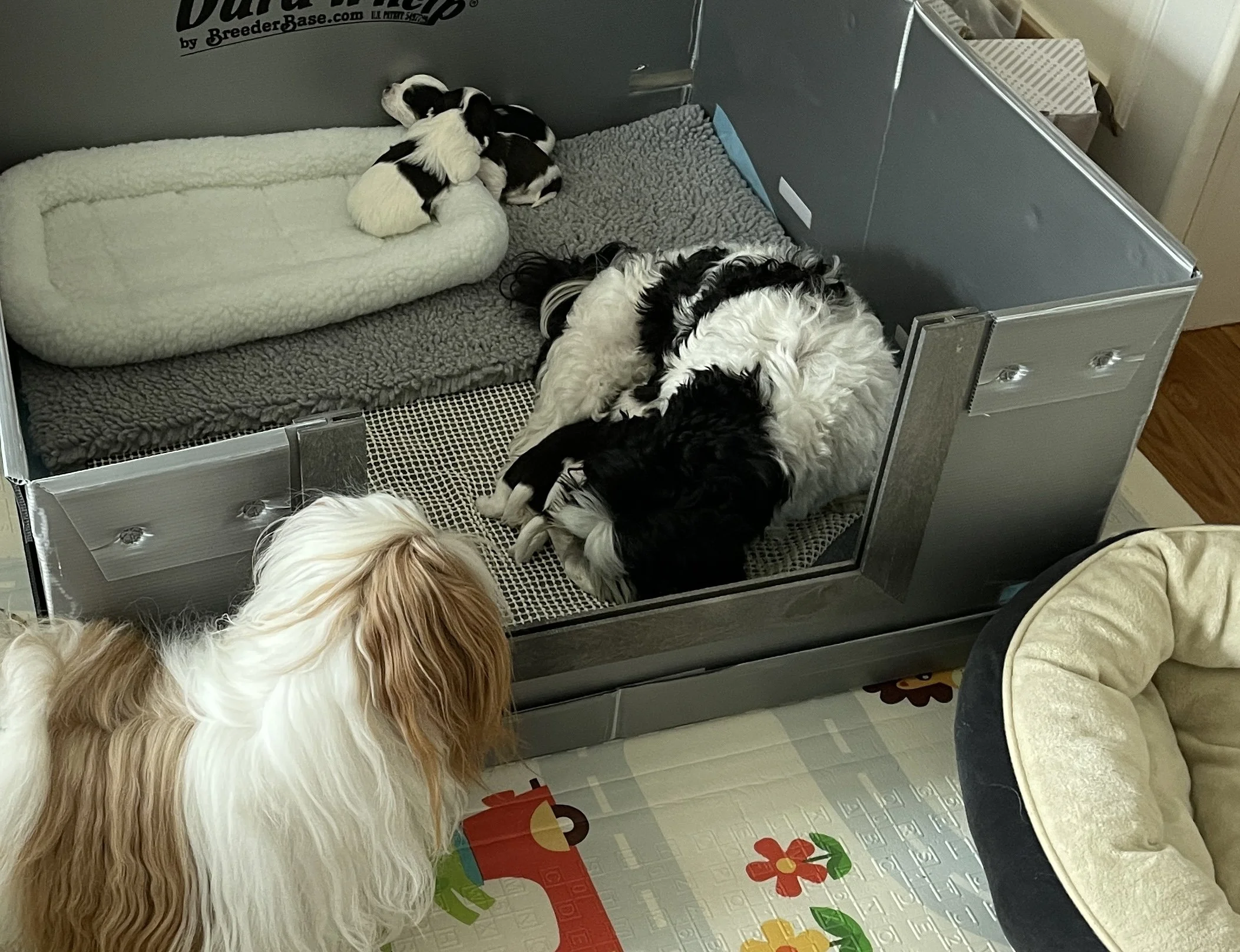
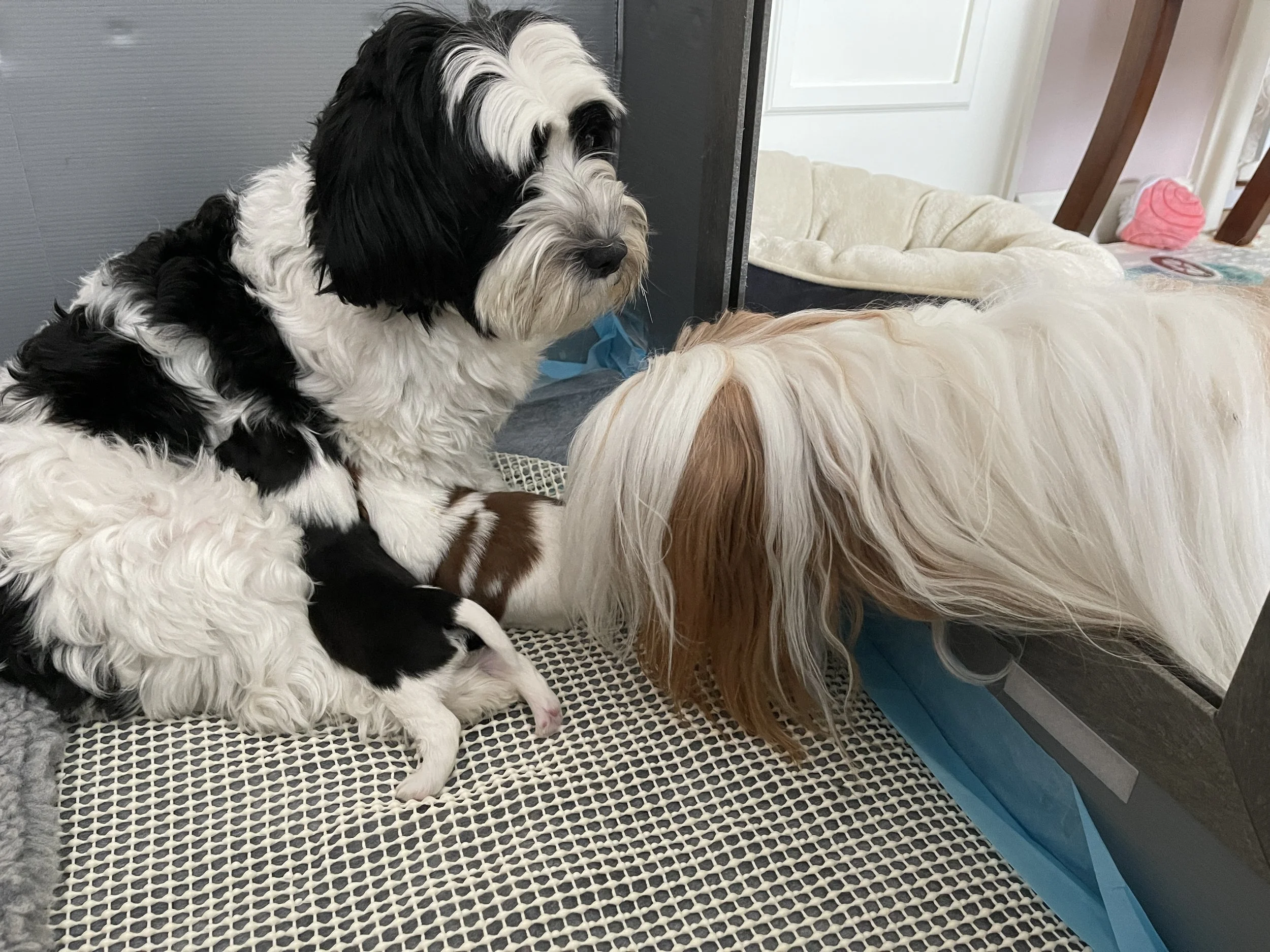
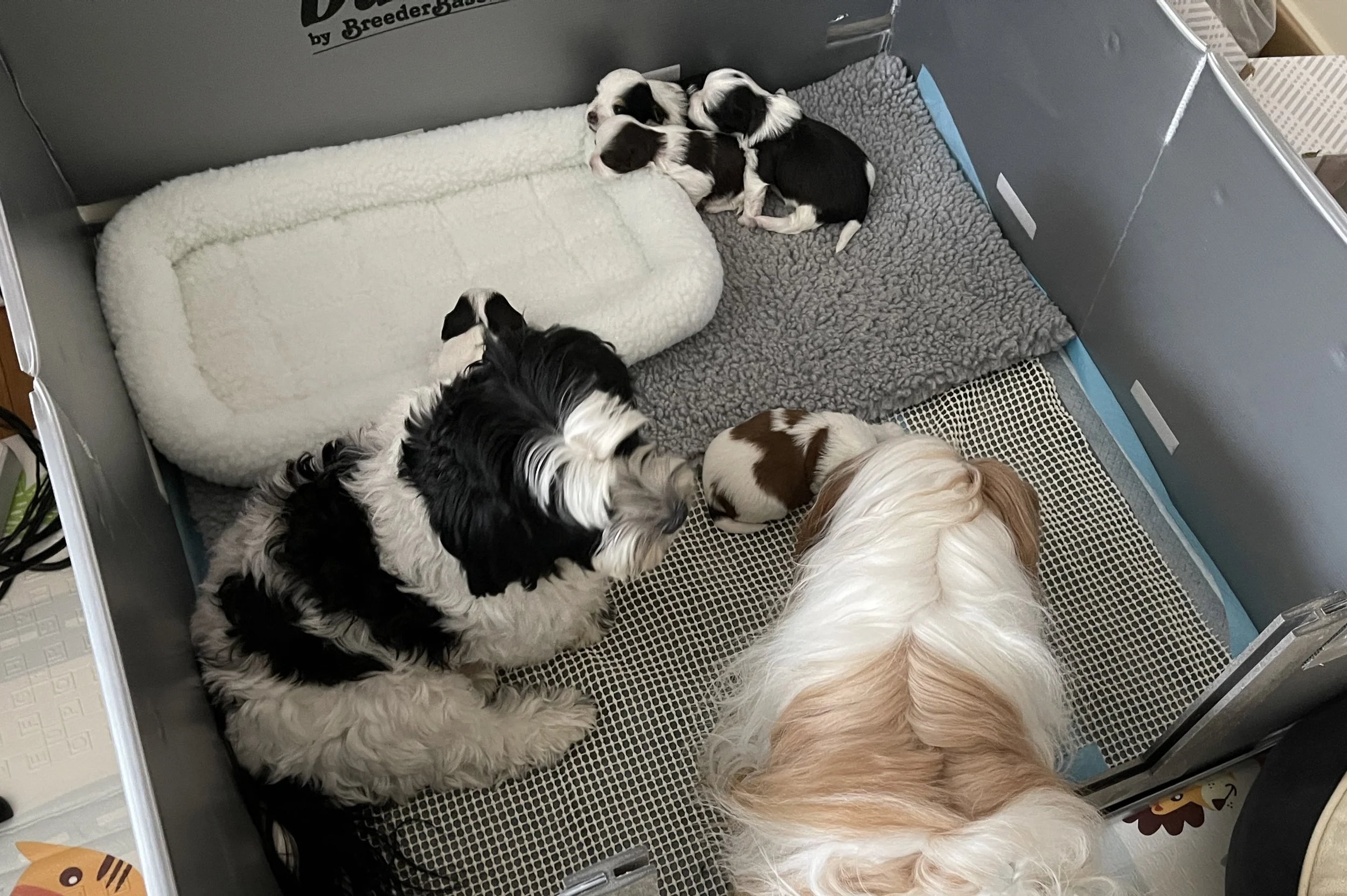
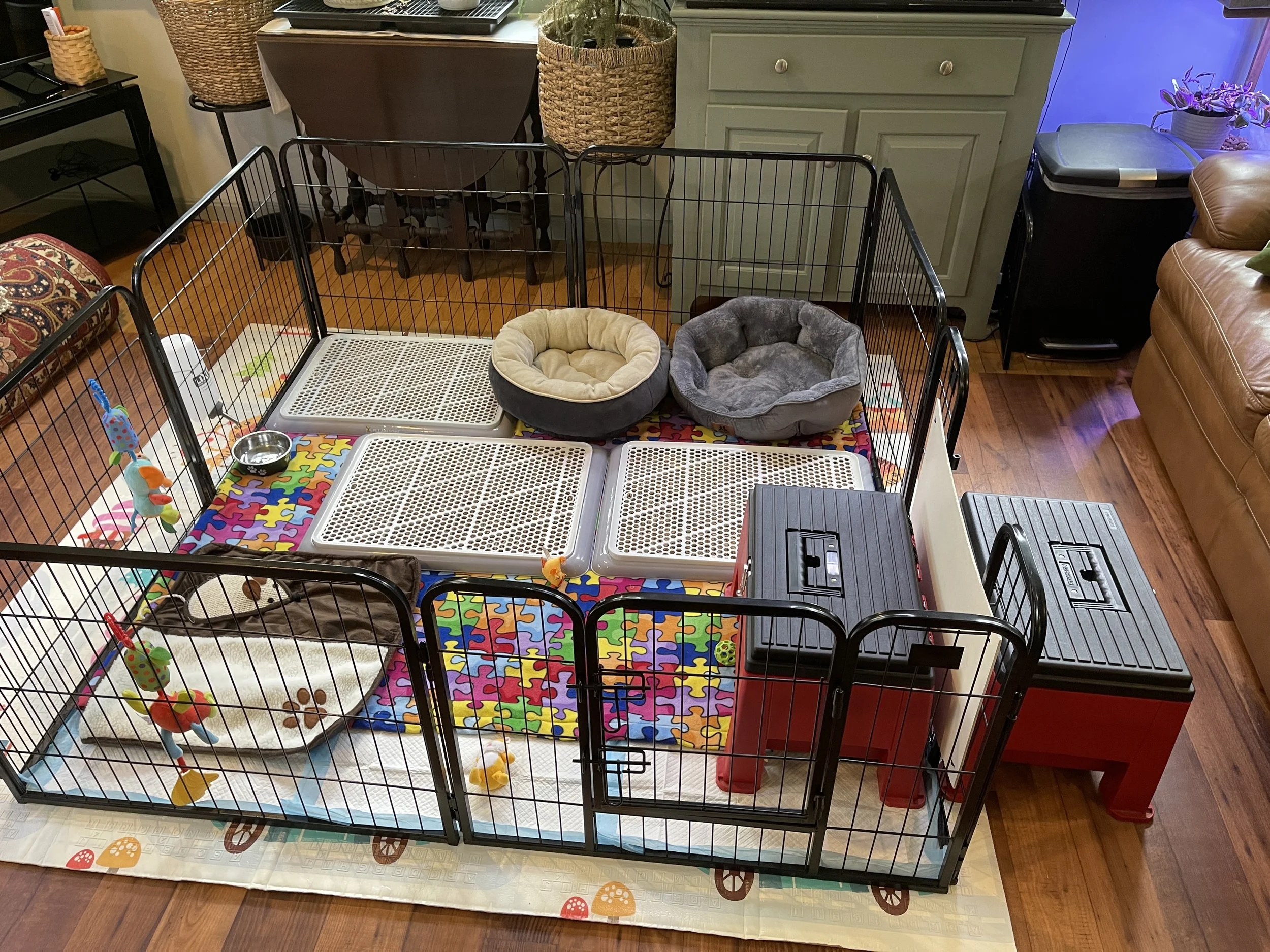
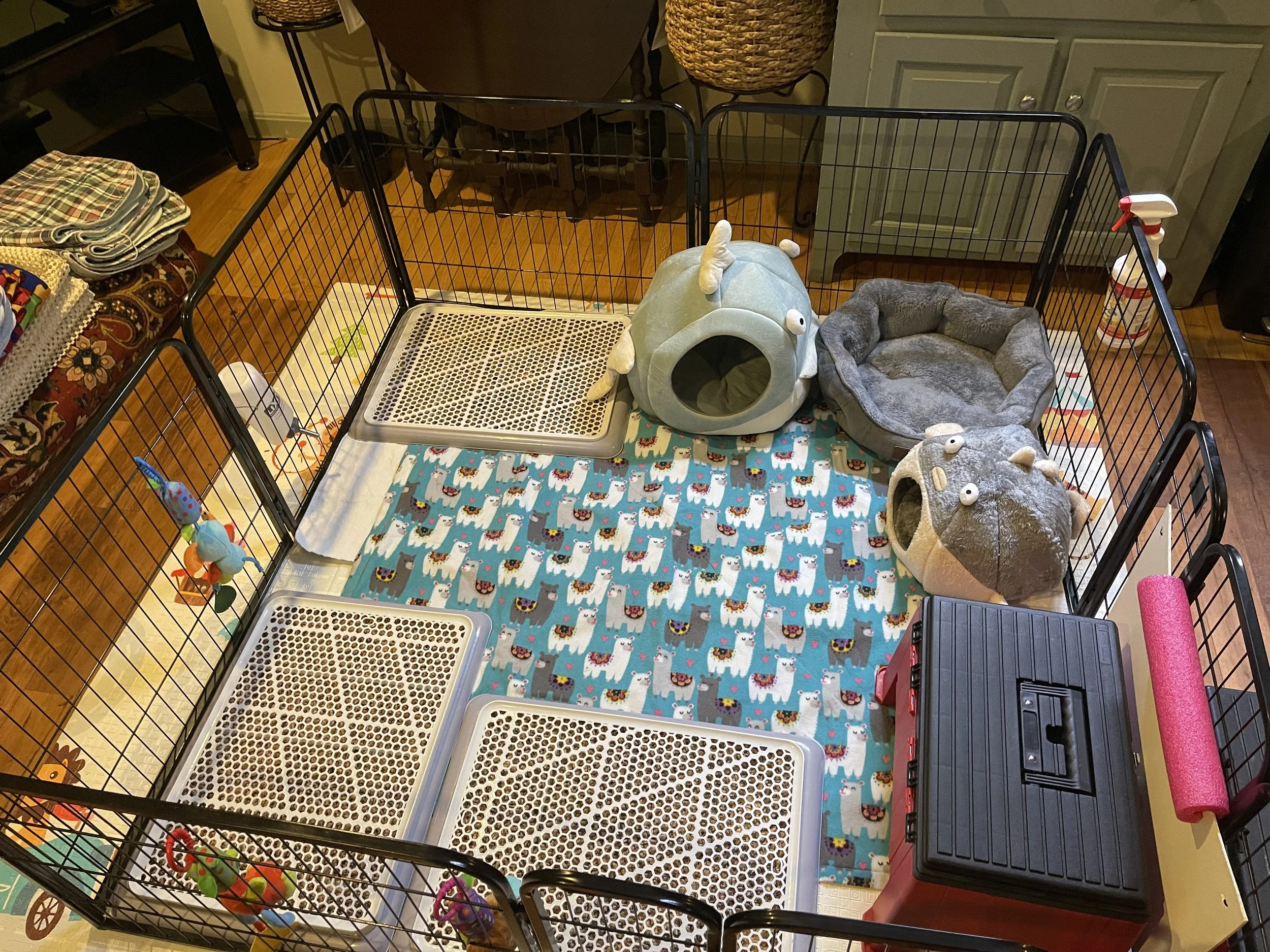
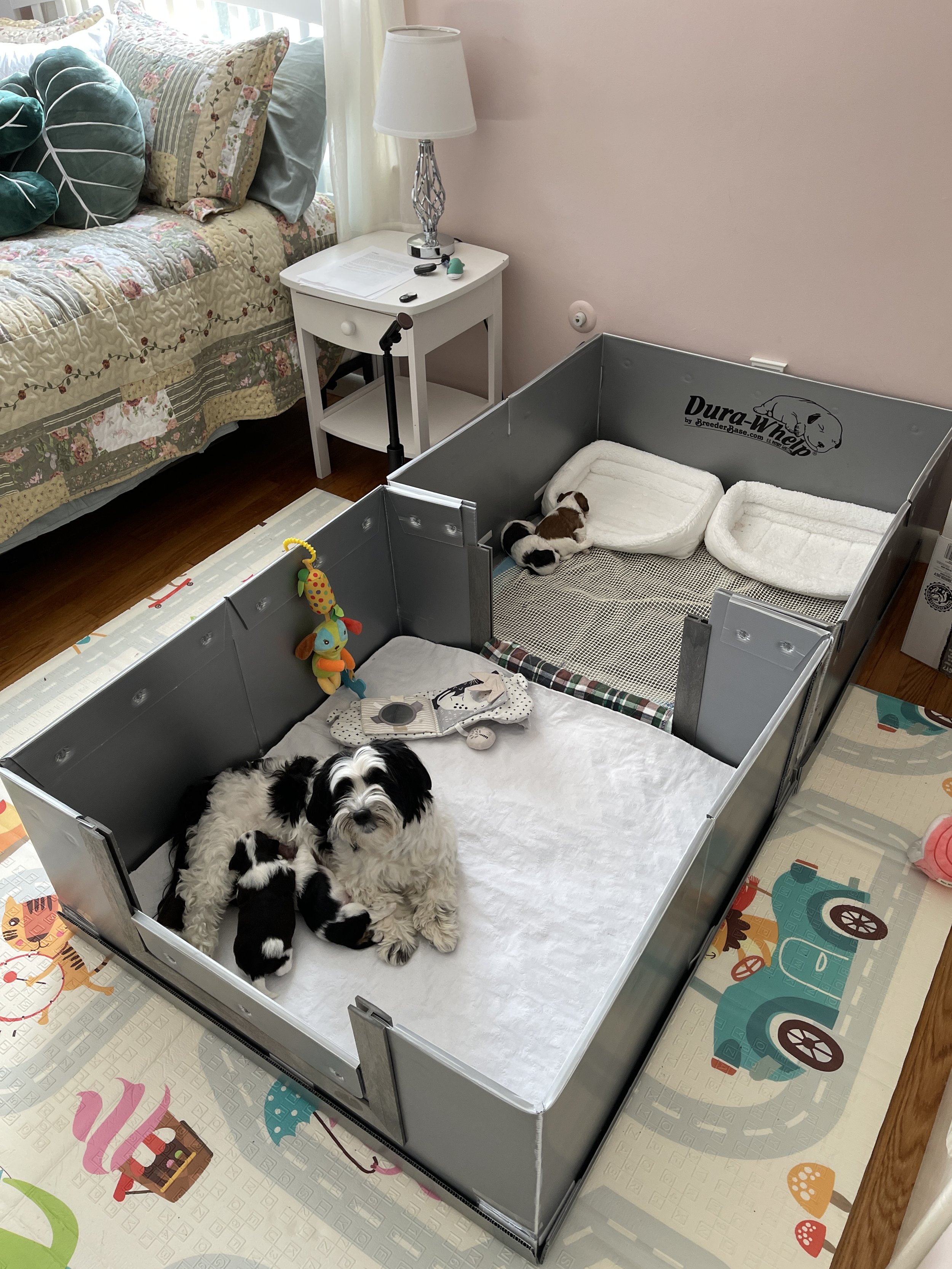
It’s definitely time to expand the whelping pen! So we add on another section. This gives mom and the puppies more room to stretch out as well as play, and allows us to add their first real potty tray too! Until now we have been using pee pads with rubber rug padding over them for traction.
Time For A Big Change
At four weeks old, just a week later, they are ready to move downstairs to the weaning pen in the family room. In the beginning the weaning pen is still not very large, and we make sure that it is very easy for the puppies to find their way to the potty trays as soon as they wake from a nap. We have stools inside and outside the pen to help mom get in and out, while still keeping the pups safely inside. Here’s a wonderful video of Grandma Panda playing with her grand kids. (Mama ZT is watching from the couch, but perfectly happy to let Grandam entertain them for a while!)